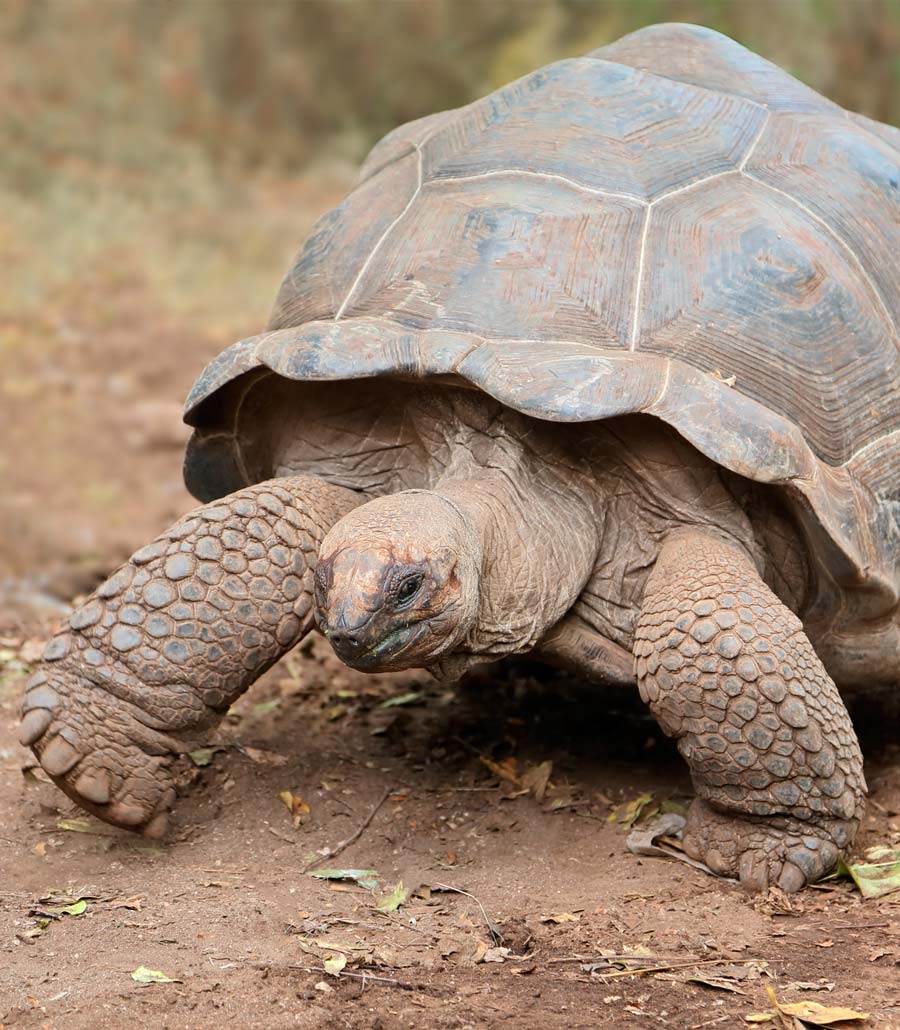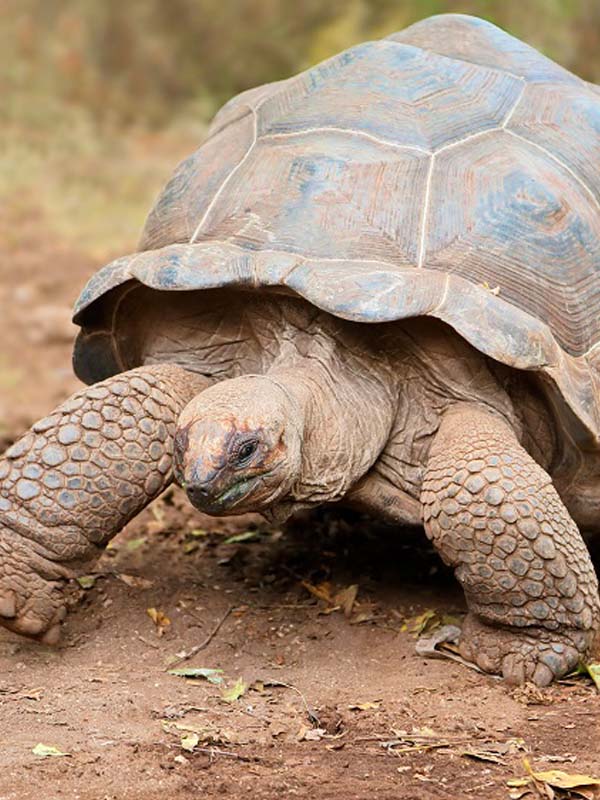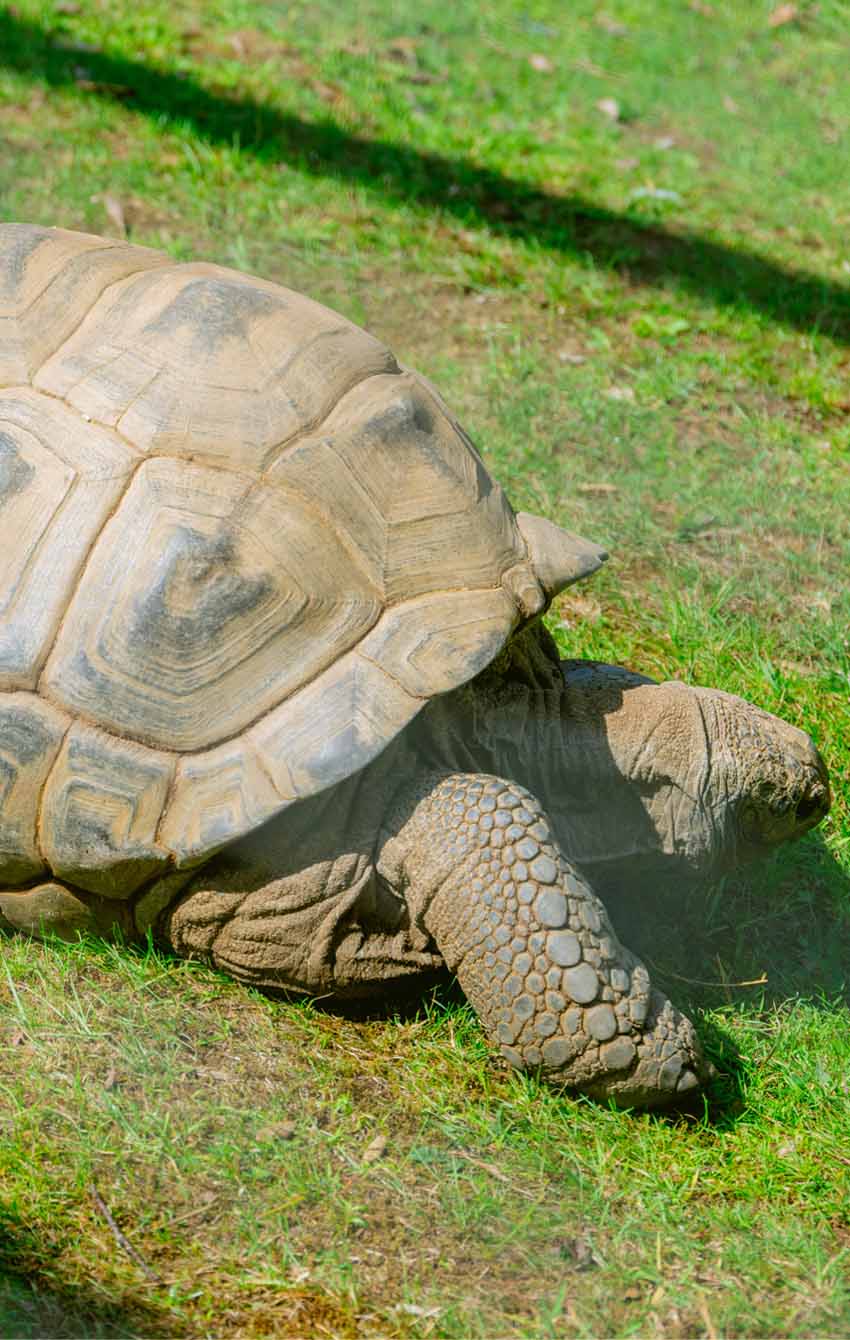
Aldabra Tortoise
Scientific Name: Aldabrachelys gigantea
Fast Facts
- Natural Habitat: Tropical coastal scrub, limestone terrain and open grasslands
- Distribution: Main population on the Aldabra Atoll, have been introduced to other islands in the Seychelles for conservation purposes.
- Lifespan: 150+ years old
- Diet: Grasses, leaves, woody shrubs, fallen fruits.
- Weight: Up to 250 kg
Behaviour
Most active during the day, these tortoises spend mornings and afternoons grazing and during the hottest hours of the day they tend to rest in shaded areas. They are a calm and docile species, moving slowly and deliberately to conserve energy wherever possible hence their long lifespan.
Reproduction
Males compete for females through displays of strength and size, stretching their necks and making deep vocal sounds. After mating, females lay 10–25 eggs per clutch and bury them to protect them from the heat and predators. 3–8 months later (depending on environmental conditions like temperature and humidity) the eggs will hatch. Young hatchlings are small and vulnerable to threats from birds and other predators. They reach maturity at 20–30 years old.
Conservation Status
Vulnerable (VU)
Threats
Historically, sailors hunted giant tortoises for meat which pushed many species to extinction. Fortunately, the isolated nature of the Aldabra Atoll protected this species from eradication. It still faces threats from habitat destruction and introduced predators.
Conservation
Conservation programmes focus on habitat protection, scientific monitoring and controlled breeding efforts.
Did You Know?
- During dry seasons when food is scarce, the tortoise can survive by reducing its activity levels and relying on stored body fat and water reserves.