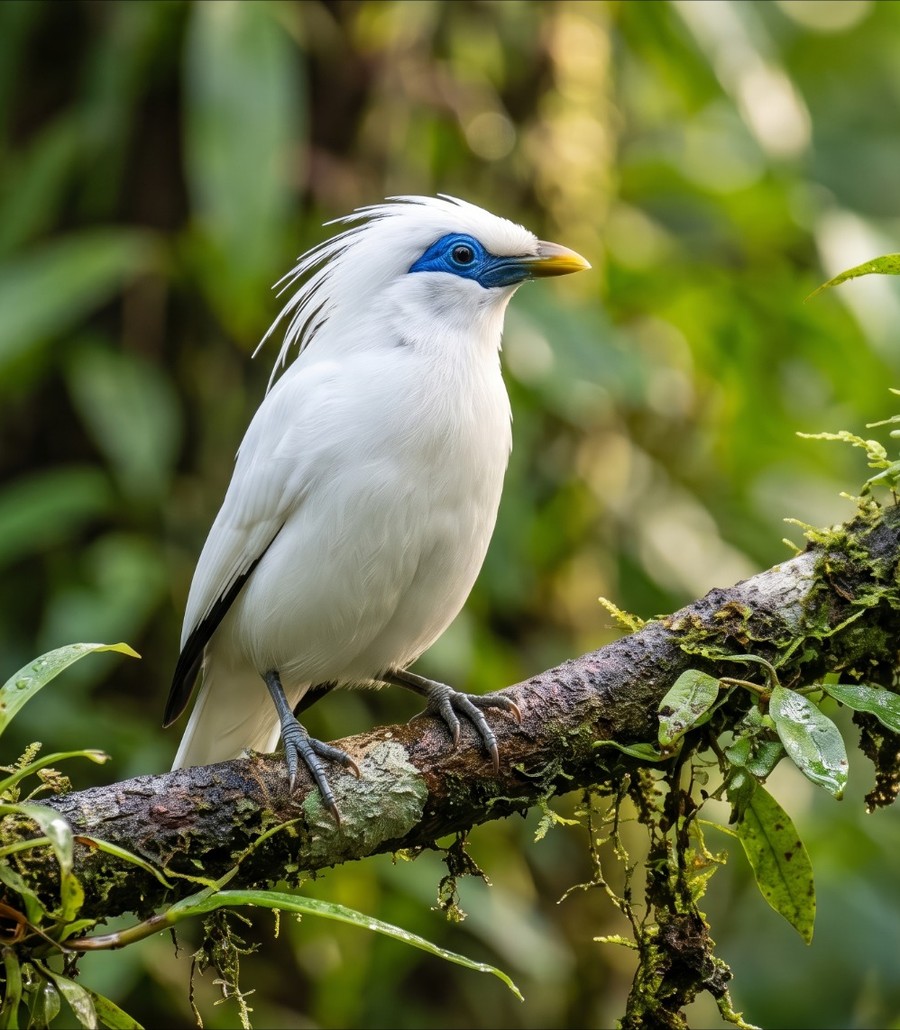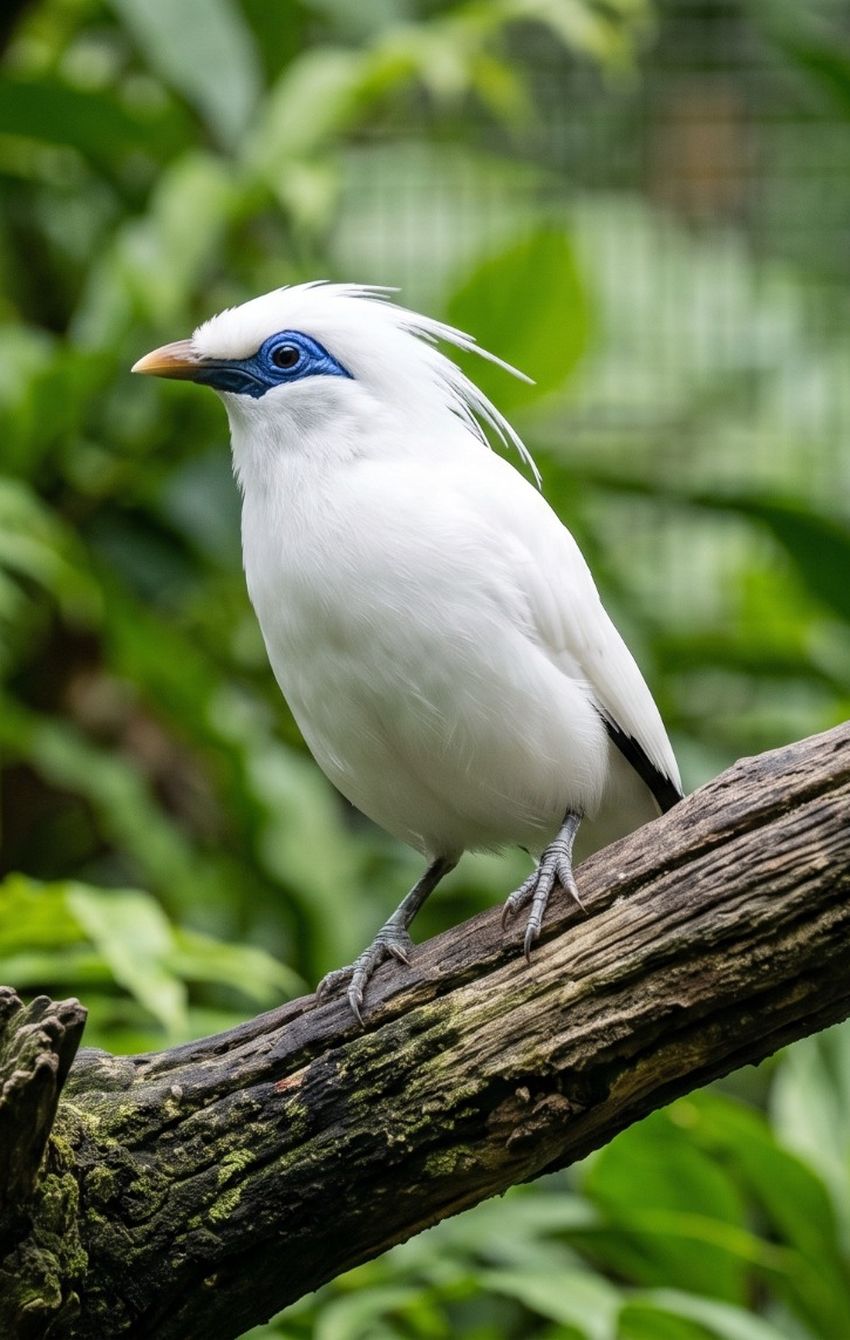
Bali Starling
Scientific Name: Leucopsar rothschildi
Fast Facts
- Natural Habitat: Dry forest, shrubland, tree and palm savanna, and flooded savanna woodland in Bali
- Distribution: Bali, Indonesia
- Lifespan: 5–15 years
- Diet: Insects such as ants, termites, caterpillars, dragonflies and grasshoppers; fruit such as figs and papaya; nectar, worms and small reptiles.
- Weight: 70–115 g
Behaviour
Bali starlings are secretive birds that use the treetops for cover and usually come to the ground only to collect nesting materials or drink. According to the 2020 IUCN assessment, fewer than 50 mature individuals were estimated to remain in the wild.
Reproduction
Bali starlings are monogamous and form long-term pair bonds. They breed in the rainy season during which time males will attract females by bobbing up and down and calling loudly. The pairs will nest in tree cavities lined with leaves and feathers and the female will lay 2–3 eggs which hatch between 12–15 days later. Both parents will bring food to the nest for their chicks. They reach maturity at approximately 1 year of age.
Conservation Status
Critically Endangered (CR)
Threats
Illegal trapping for the pet trade is a major threat. Keeping a Bali starling is considered a status symbol, encouraging poaching.
Human encroachment on the birds’ habitat has also contributed to their decline. The human population in Bali has tripled over the last 70 years.
Conservation
The Bali starling is being reintroduced into the wild by community-based programme BEGAWAN in Bali. The BEGAWAN team also runs educational programmes to raise awareness of environmental threats and endangered birds. The Bali starling also has its own Species Survival Plan (SSP) which many zoos around the world participate in.
Did You Know?
- The Bali starling is Bali's official bird and is endemic to the island.