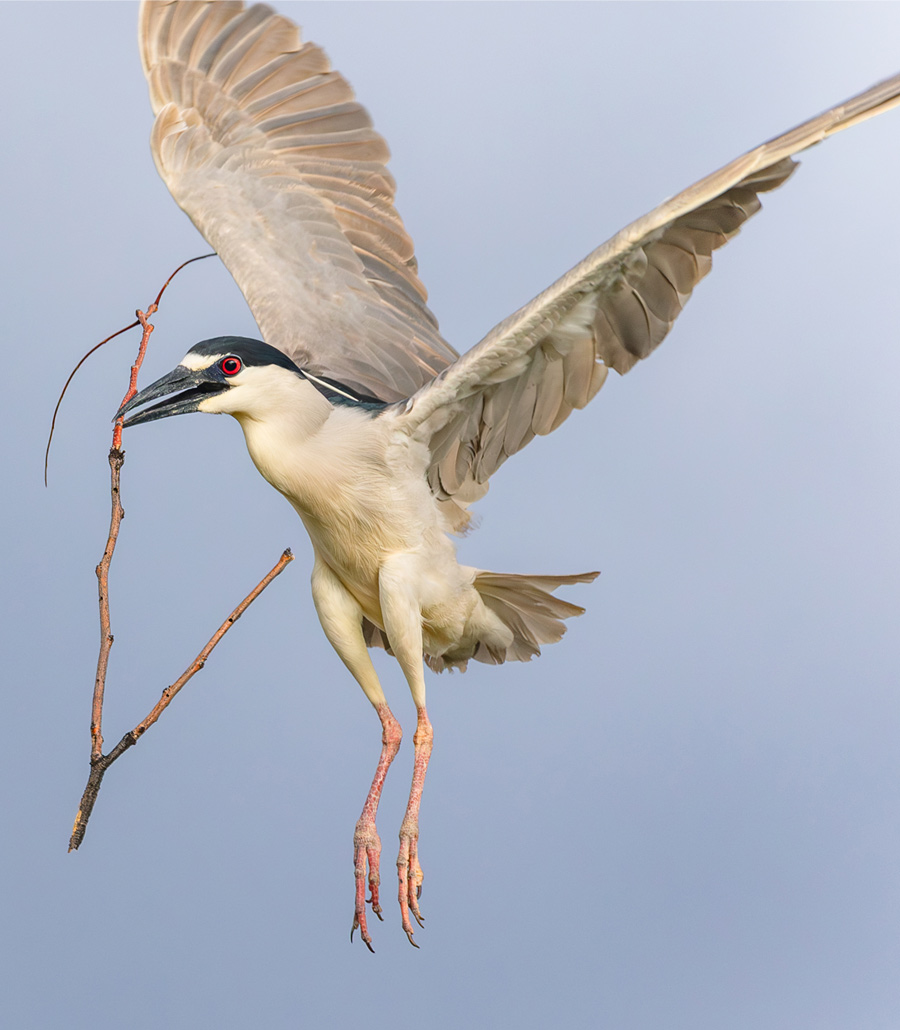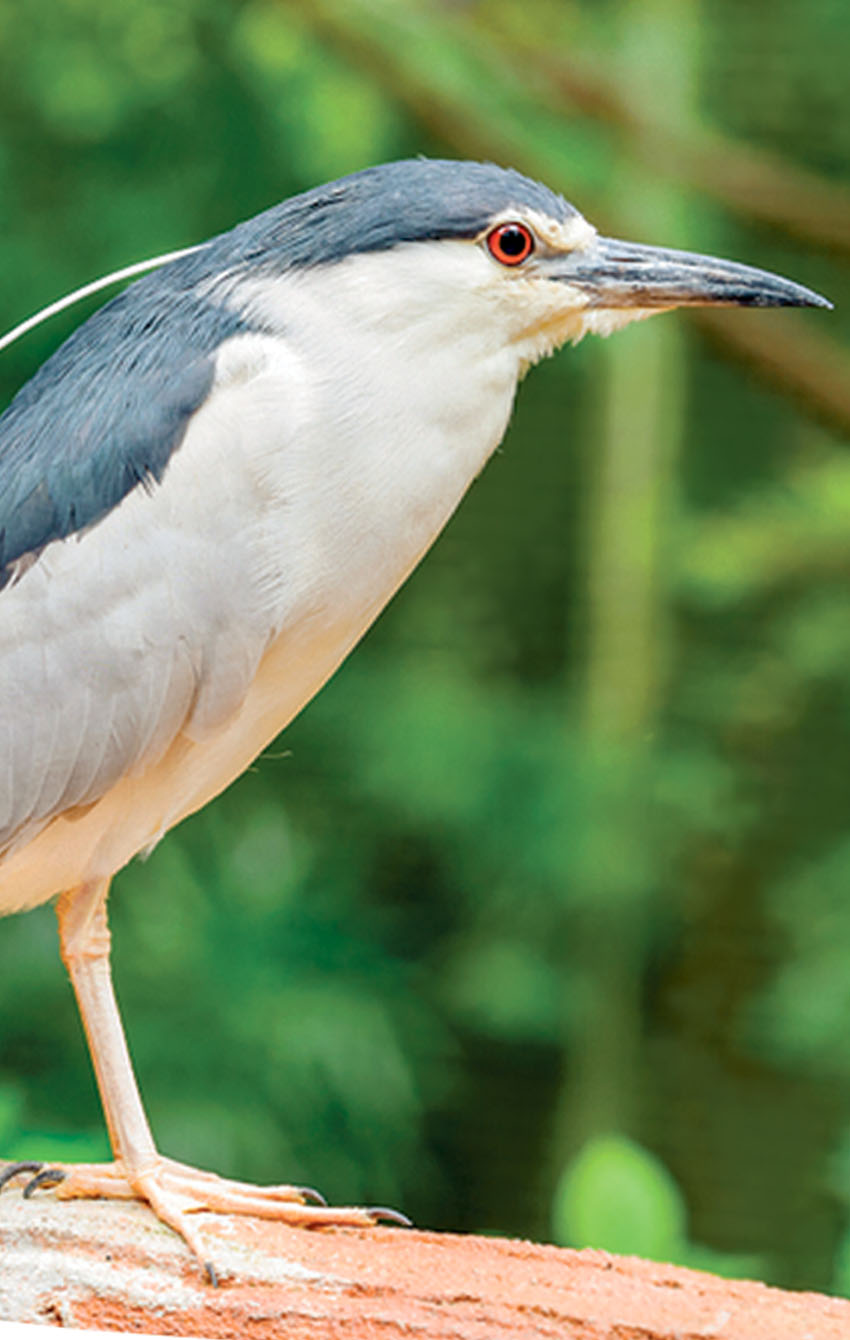
Black-crowned Night Heron
Scientific Name: Nycticorax nycticorax
Fast Facts
- Natural Habitat: Wetlands such as swamps, streams, rivers, marshes, edges of lake and mud flats
- Distribution: Europe, North America, South America, Asia and Africa
- Lifespan: Around 21 years
- Diet: Primarily fish and other freshwater and marine organisms such as leeches, crayfish, mussel, squid, amphibians and both aquatic and terrestrial insects.
- Weight: Male: 600–800 g; Female: 520–700 g
Behaviour
The black-crowned night heron is an opportunistic forager that feeds throughout the night which means it avoids any competition with herons active during the day using the same habitat. The black-crowned night heron uses a technique called ‘bill vibrating’ which is where it opens and closes its mouth quickly in the water to create vibrations that lure prey in where it grasps it with its beak.
Reproduction
Black-crowned night herons are presumed to be monogamous. The female lays a clutch of 3–5 eggs, which are laid at two-day intervals, beginning 4–5 days after the monogamous pair is formed.
Conservation Status
Least Concern (LC)
Threats
Wetland drainage and destruction due to pesticides such as DDT which negatively affect hatching success. In some areas chicks are still taken for food and adults are traded at traditional medicine markets.
Conservation
The black-crowned night heron benefits from wetland restoration projects and efforts to reduce the use of pesticides and pollutants through sustainable land management.
Did You Know?
- Young black-crowned night herons will regurgitate their food onto intruders when disturbed.