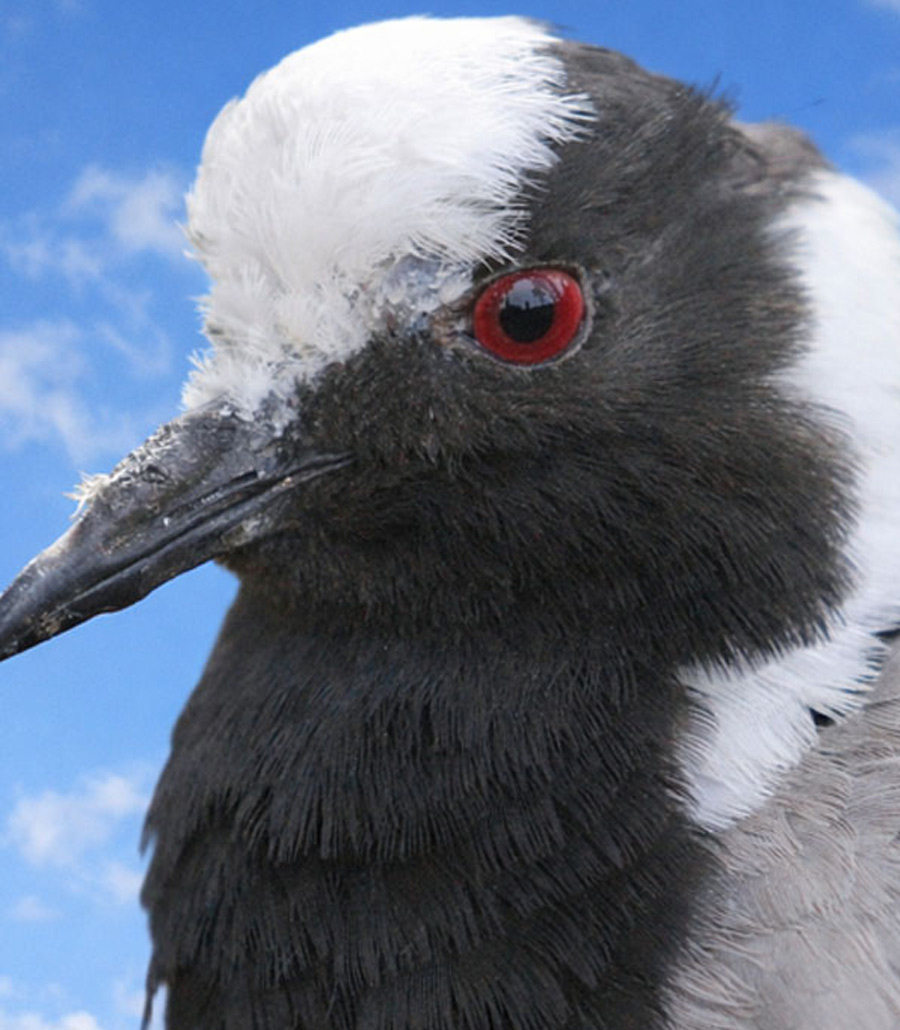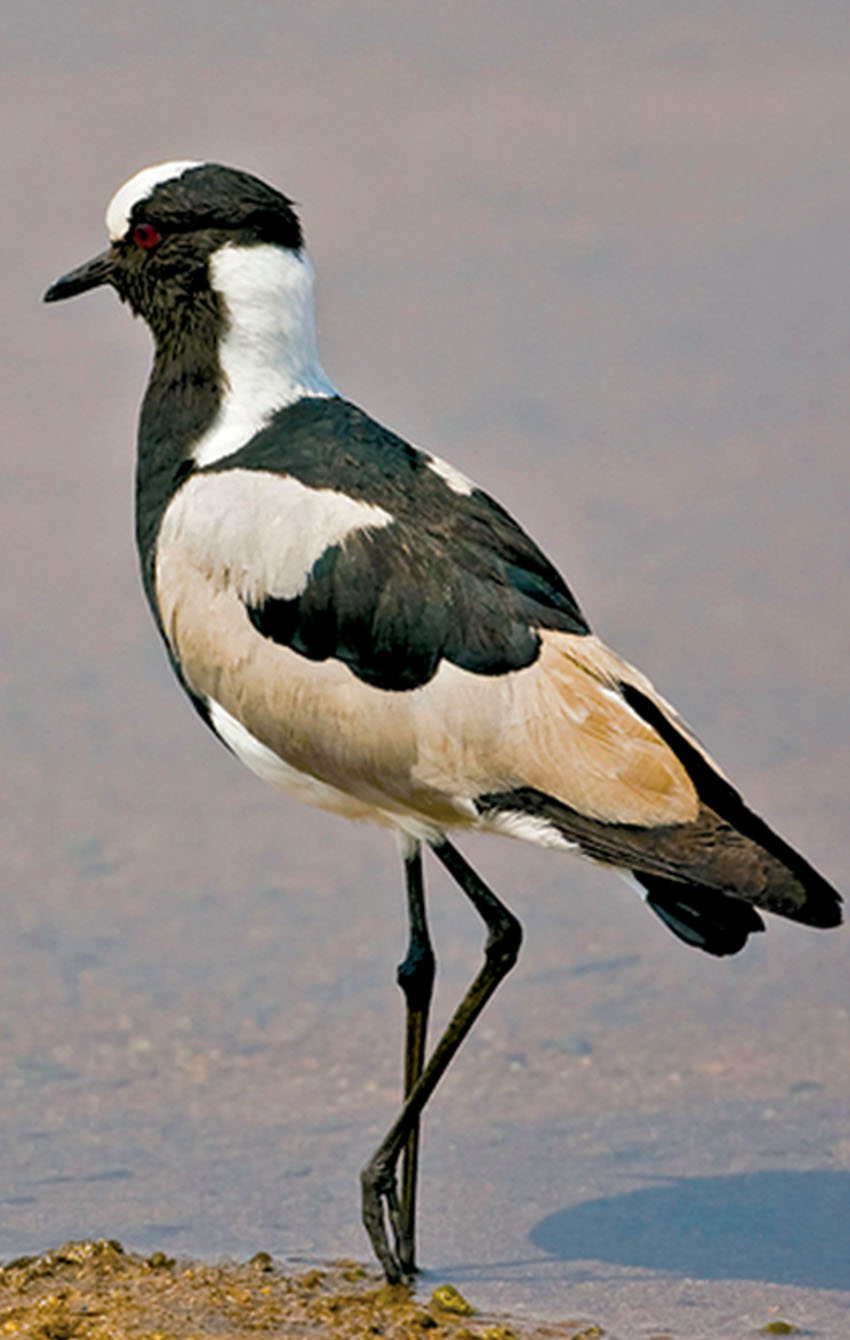
Blacksmith Lapwing
Scientific Name: Vanellus armatus
Fast Facts
- Natural Habitat: Temperate grassland, flooded grassland and savannahs
- Distribution: Angola, Botswana, DR Congo, Kenya, Lesotho, Malawi, Mozambique, Namibia, South Africa, Tanzania, Zambia, Zimbabwe and Burundi.
- Lifespan: 10–20 years
- Diet: Molluscs, crustaceans, worms, insects, butterflies, beetles and ants
- Weight: 114–213 g
Behaviour
Outside the breeding season, Blacksmith lapwing can be found in small non-breeding flocks of up to 100 individuals. While aggression in this species is rare, Blacksmith lapwings are very territorial, especially when they have a nest.
Reproduction
Blacksmith lapwings are monogamous and form pair bonds that remain for life. The female lays between 1–4 eggs and both parents incubate the eggs. The young become independent around a month after hatching.
Conservation Status
Least Concern (LC)
Threats
Habitat degradation from wetland drainage and conversion of habitats to agricultural land. This reduces the amount of suitable breeding and foraging sites. Minor risks from pesticide use in agriculture which can indirectly poison the blacksmith lapwing.
Conservation
Wetland and habitat protection as well as monitoring efforts.
Did You Know?
- Blacksmith lapwings are named from their repeated metallic 'tink, tink, tink' alarm call, which sounds like a hammer striking an anvil.