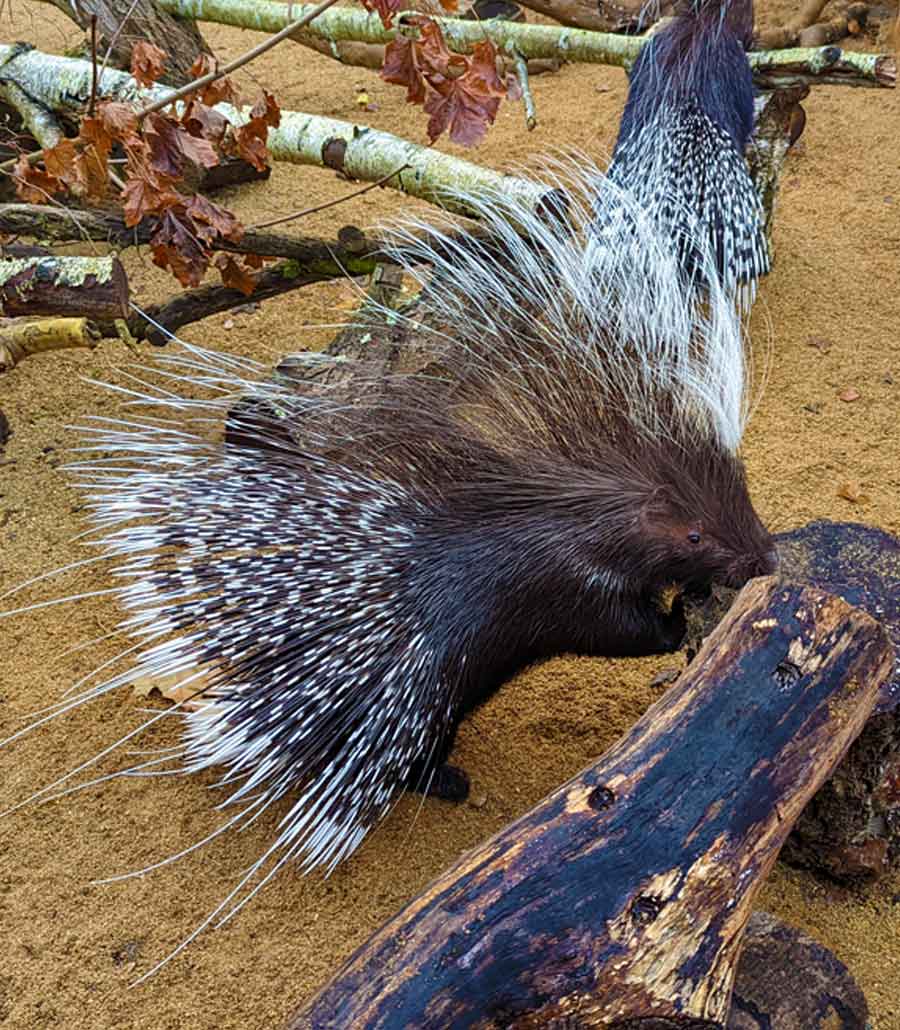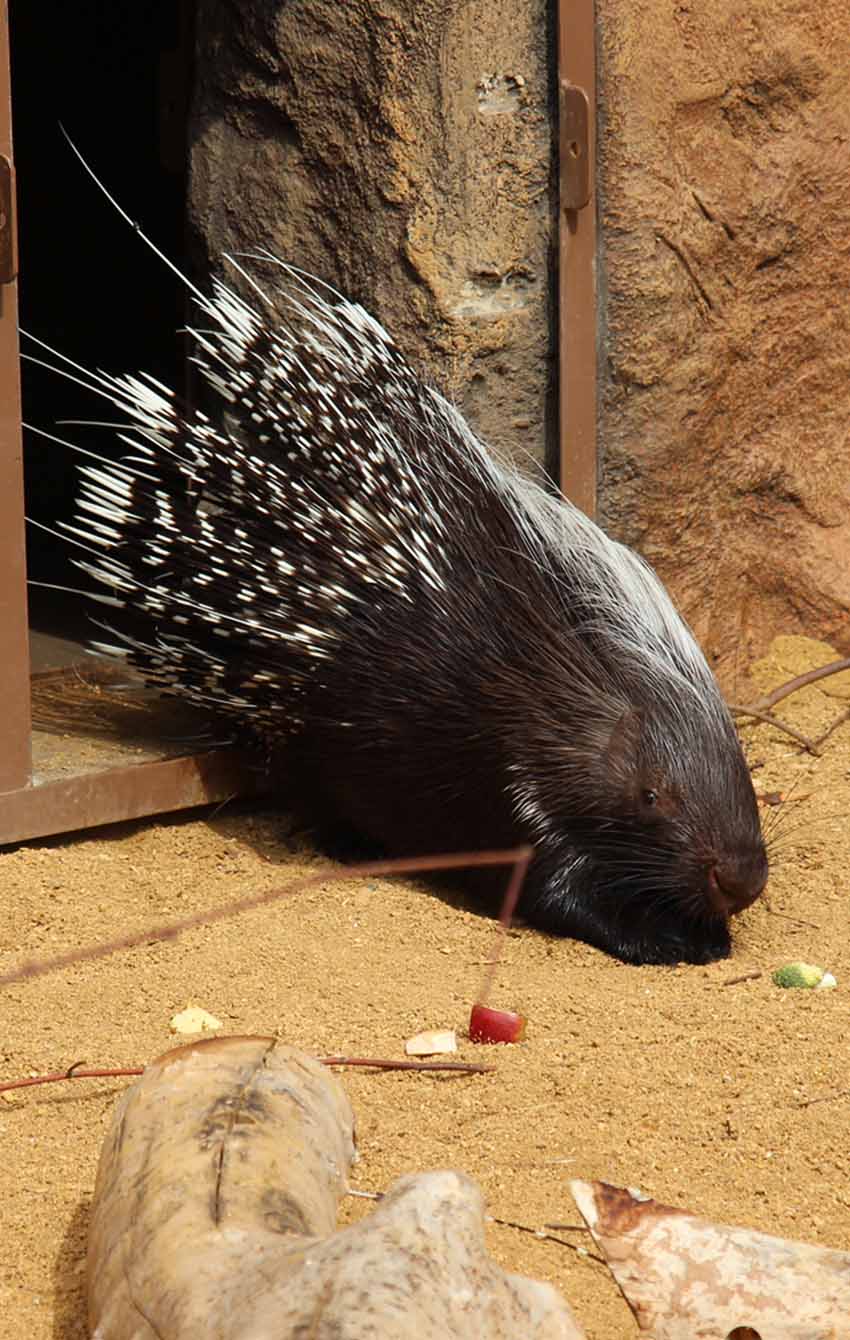
Cape Porcupine
Scientific Name: Hystrix africaeaustralis
Fast Facts
- Natural Habitat: Grasslands, Savannahs, Shrublands and Woodlands.
- Distribution: Central and Southern Africa: Angola, Botswana, Lesotho, Mozambique, Namibia, South Africa, Eswatini, Zambia, Zimbabwe and extending up to Kenya, Uganda and DR Congo.
- Lifespan: 12–15 years
- Diet: Roots, tubers, bulbs, fallen fruit, bark, stems, leaves and flowers. To address any potential mineral deficiencies, the Cape porcupine engages in ‘osteophagia’, which is where it gnaws on bones to obtain calcium and phosphorous.
- Weight: 10–30 kg
Behaviour
The Cape Porcupine is nocturnal. During the night it forages before returning to its den just before dawn. During the day, it rests in burrows, rock crevices or caves to avoid predators and the daytime heat.
Reproduction
The Cape porcupine has a monogamous mating system, forming stable bonds that persist throughout the individuals life. Breeding activity occurs year round with the majority of births occurring between August and March. Litter sizes range between 1–4 young with a gestation period of 93–94 days. Both parents provide care for the young who stay with their parents until they reach 6–9 months.
Conservation Status
Least Concern (LC)
Threats
Pressures due to human activities such as agricultural expansion and poaching for meat and quills. Human-wildlife conflict is a notable issue as porcupines often end up crop raiding and face persecution from farmers through trapping and/or shooting.
Conservation
The Cape porcupine is protected in South Africa and many populations of Cape porcupine are supported within numerous existing protected areas across southern Africa that benefit from anti-poaching measures and habitat management.
Did You Know?
- The cape porcupine is Africa’s heaviest species of rodent!