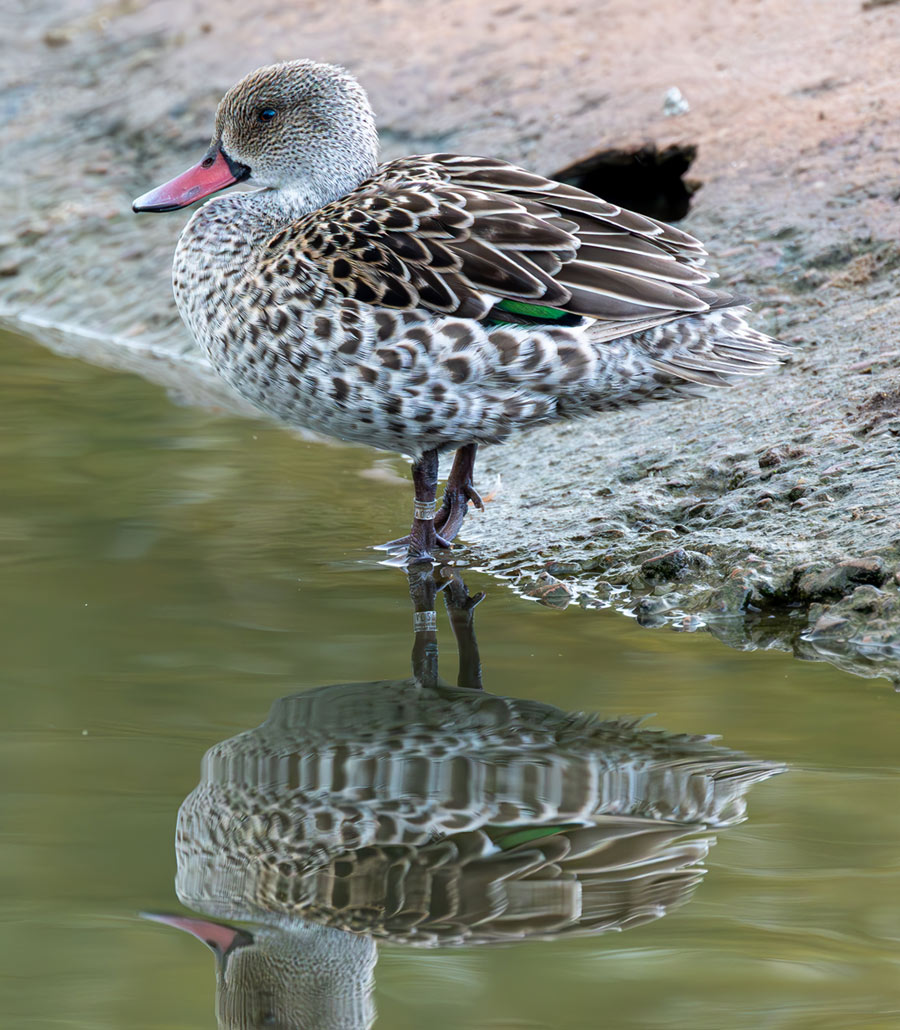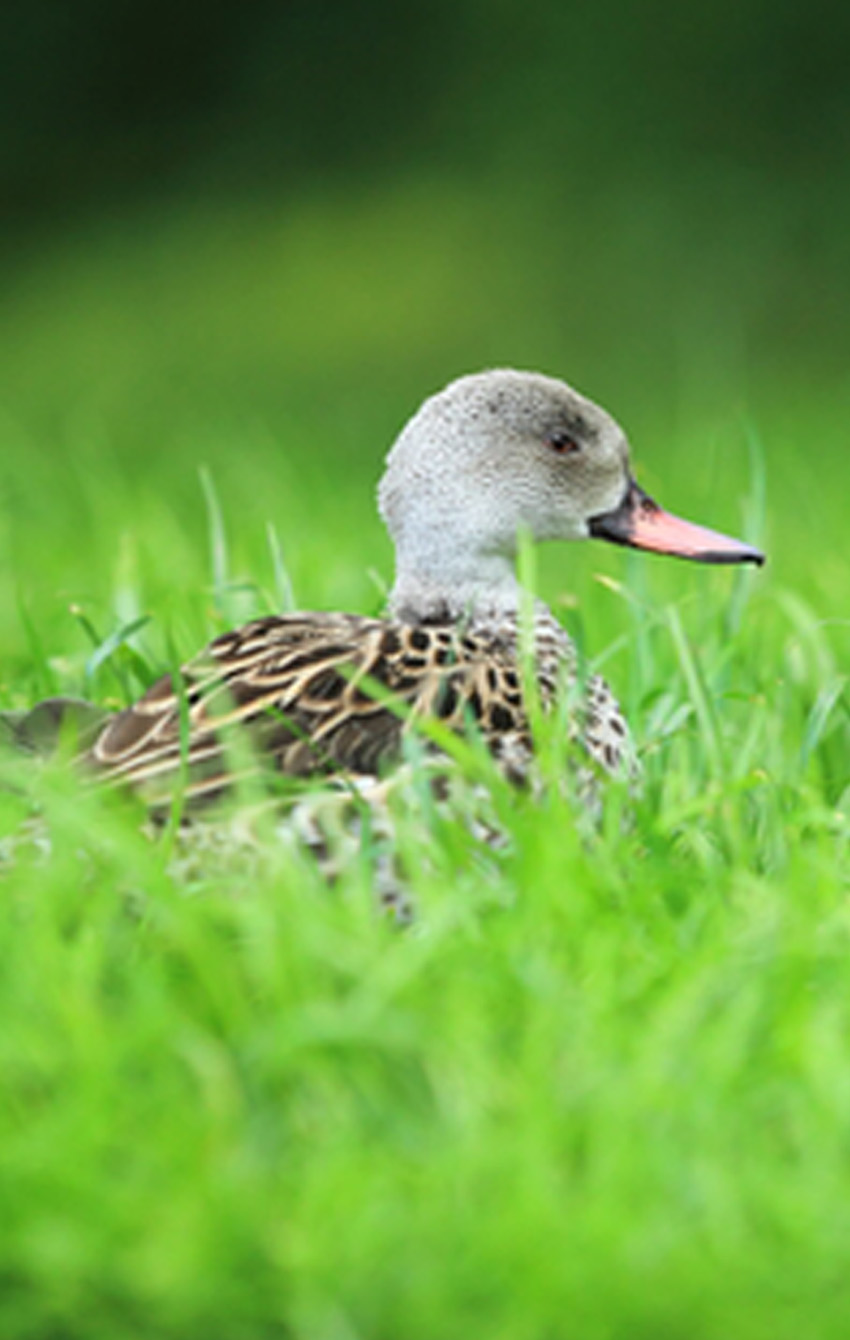
Cape Teal
Scientific Name: Anas capensis
Fast Facts
- Natural Habitat: Shallow saline lakes, rivers, flooded wetlands, reservoirs, coastal shorelines, lagoons
- Distribution: Angola, Botswana, Chad, Ethiopia, Kenya, Mozambique, Namibia, Niger, Nigeria, South Africa, Sudan, Tanzania, Zambia and Zimbabwe.
- Lifespan: 10–20 years
- Diet: Stems, leaves, seeds of pondweeds, aquatic insects, crustaceans, tadpoles and small invertebrates
- Weight: 350–500 g
Behaviour
Cape teals are a non-migratory species of dabbling duck, but it does move opportunistically with the rains. They are often seen foraging in shallow water using a combination of filter feeding and dabbling techniques to extract small invertebrates and plant matter. Cape teals are often found in large flocks providing safety in numbers to reduce the risk of predation.
Reproduction
Cape teals form monogamous pairs during the breeding season, with both parents helping to raise the young. Females construct simple nests on the ground lined with grass and feathers, often hidden among reeds. Usually females have clutches of 6–10 eggs, with young fledging 50–60 days after hatching.
Conservation Status
Least Concern (LC)
Threats
Habitat destruction and degradation due to agricultural expansion, urbanisation and climate change. Wetland drainage reduces the available feeding and breeding sites. Pollution and water contamination are additional risks for this species.
Conservation
Wetland restoration projects and the establishment of protected areas aim to preserve the ecologically important wetland habitat.
Did You Know?
- Cape Teals can extract salt from brackish water which is why they are one of a handful of duck species that can be found in both saline wetlands and freshwater wetlands.