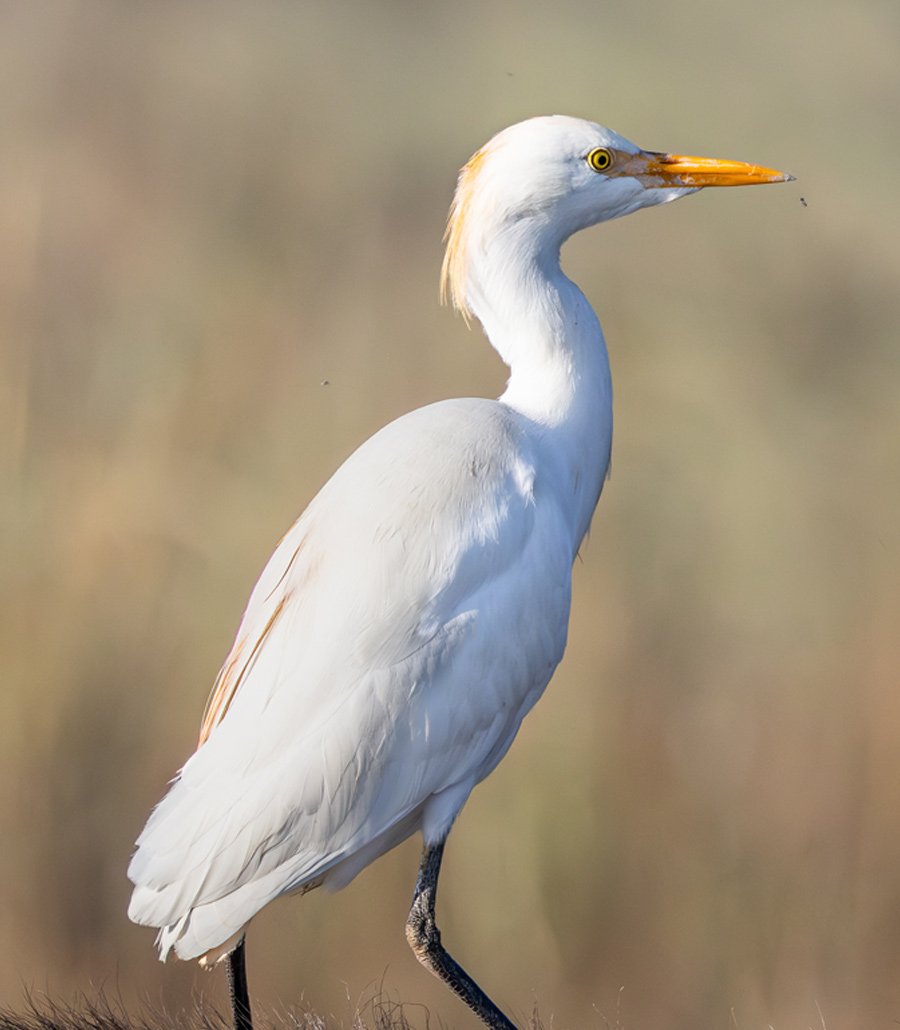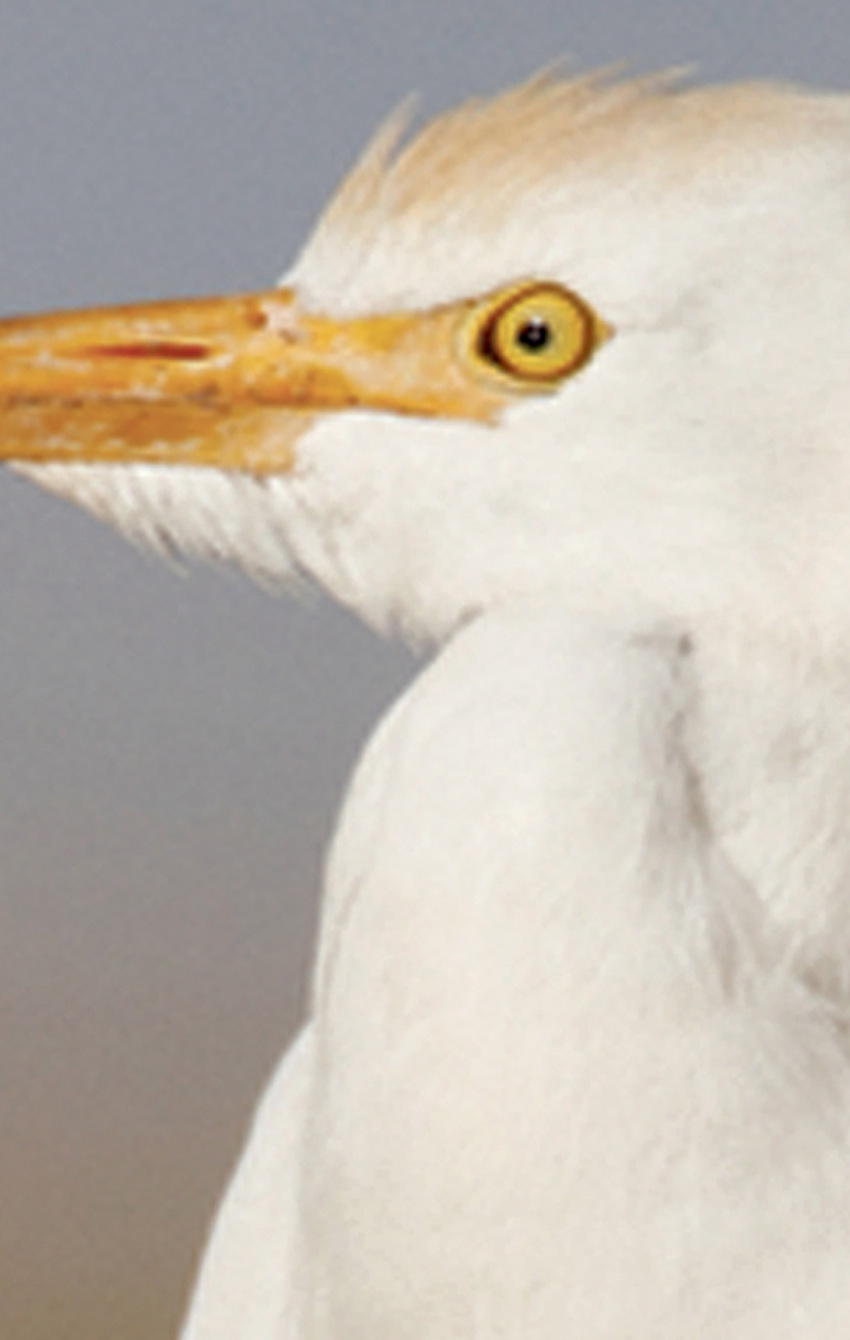
Cattle Egret
Scientific Name: Bubulcus ibis
Fast Facts
- Natural Habitat: Grasslands, savannahs, wetlands, agricultural fields, urban parks.
- Distribution: Every continent except Antarctica
- Lifespan: 15 Years
- Diet: Insects (such as grasshoppers, flies, crickets and beetles). Spiders, worms, frogs, lizards and small rodents.
- Weight: 200–510 g
Behaviour
Cattle Egrets are very social, often found nesting in large groups and foraging in flocks. They have a hierarchical social structure with the most dominant birds occupying the best nesting sites. They are a very adaptable species and will take advantages of changing food availabilities. They will use their sharp beaks to quickly snatch prey off the ground of from mid-air.
Reproduction
Cattle Egrets nest in large colonies of up to thousands of birds in trees or shrubs near water bodies. Males will perform elaborate courtship displays that consist of stretching their neck, fluffing up their plumage and vocalising. Once paired up, females and males will both build the nest before the female lays 3–4 pale blue eggs. Both parents feed and care for the chicks after hatching.
Conservation Status
Least Concern (LC)
Threats
Habitat loss due to wetland drainage and the expansion of urban areas. Pesticide use is a risk in some areas as it has been poisoning the birds directly or indirectly by affecting their insect prey.
Conservation
Preservation of wetlands and other key ecological habitats. Reducing the use of pesticides and maintaining healthy ecosystems also supports the conservation of Cattle Egrets.
Did You Know?
- Cattle Egrets have been observed riding the backs of cattle, livestock and even rhinos, picking insects off the animals’ hides. This is great for both parties! The Egret gets food and the animals get relief from pests!