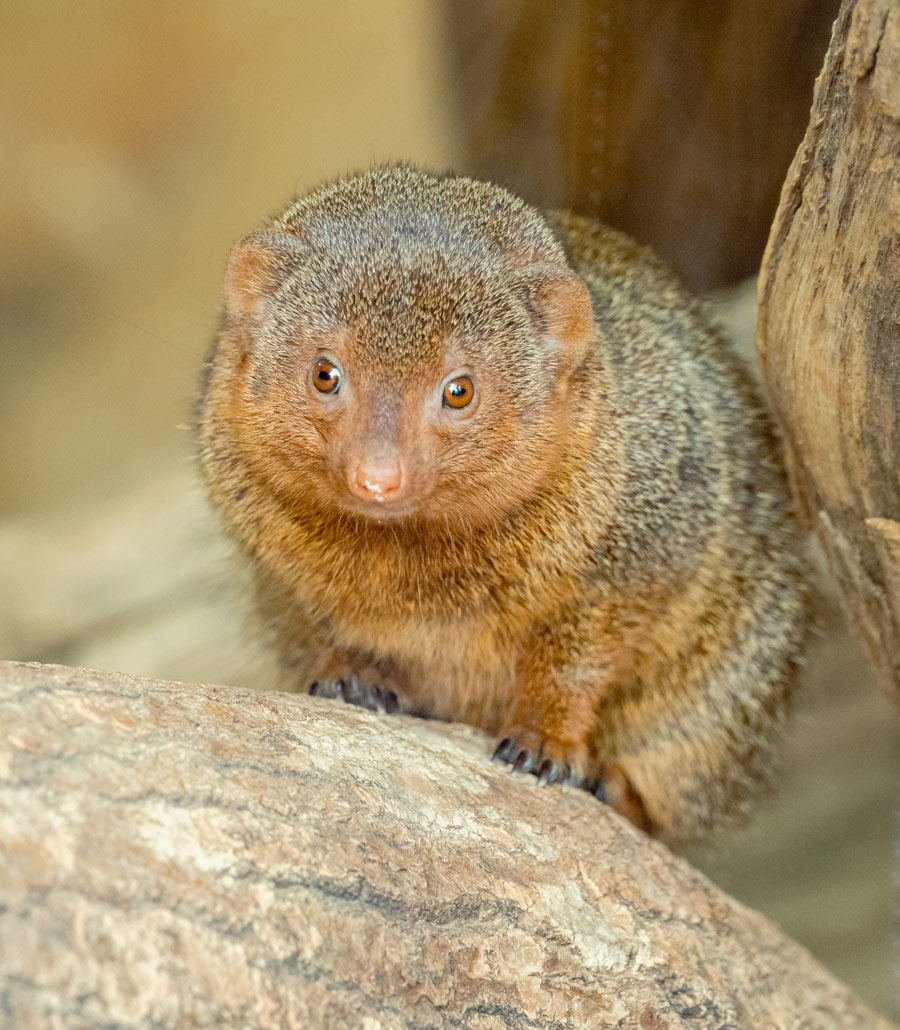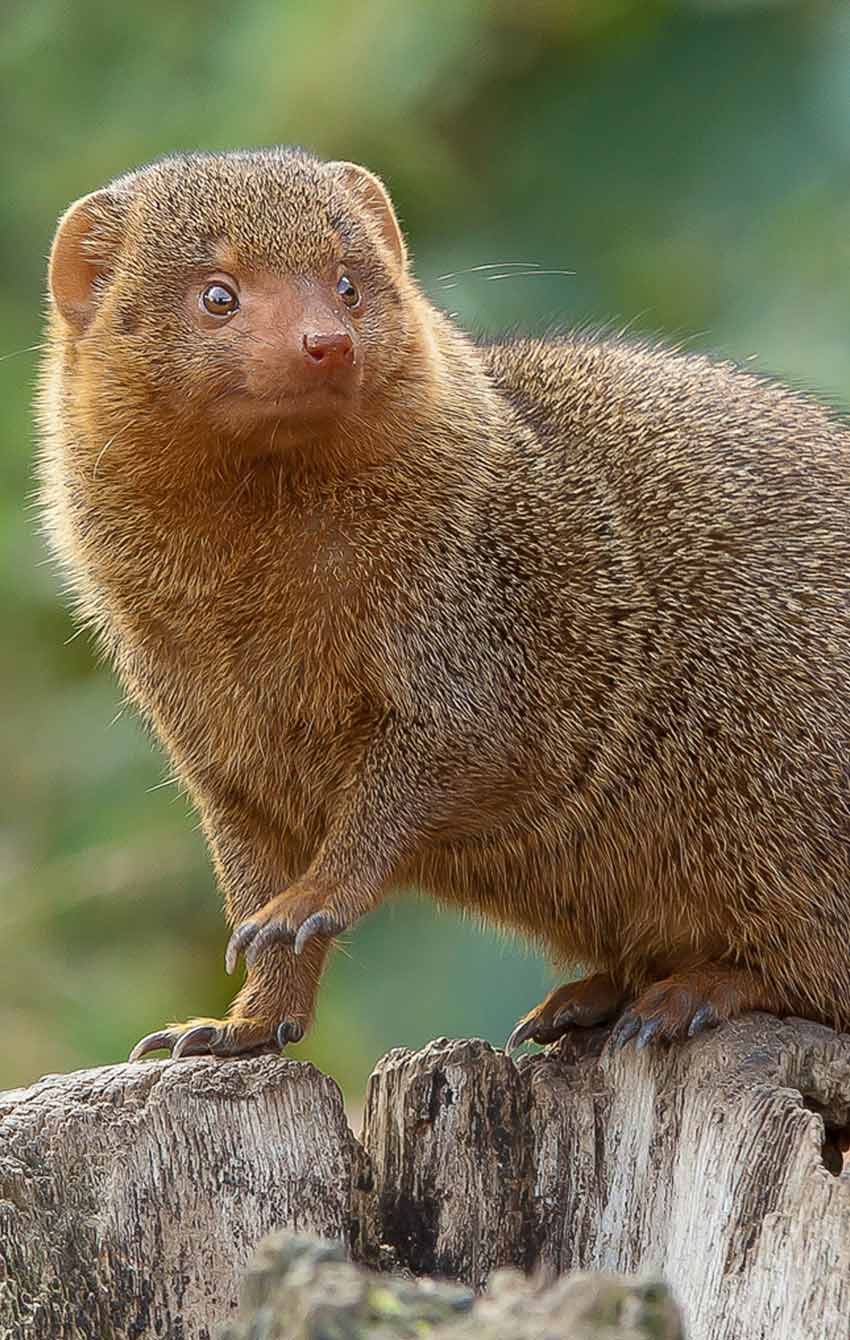
Dwarf Mongoose
Scientific Name: Helogale parvula
Fast Facts
- Natural Habitat: Savannas, grasslands and open forests
- Distribution: Angola, Botswana, DR Congo, Ethiopia, Kenya, Malawi, Mozambique, Namibia, Somalia, South Africa, Sudan, Swaziland, Tanzania, Uganda and Zambia.
- Lifespan: 10–12 years
- Diet: Insects like beetles, termites and crickets. Occasionally they also eat small rodents and reptiles.
- Weight: 200–425 g
Behaviour
The Dwarf Mongoose live in groups known as bands which range from a few individuals up to as many as 30. These bands generally have a dominant male and female, but the group cooperates especially when caring for young or foraging. The Dwarf Mongoose has a particularly good sense of smell which they use to locate food. Once they have found their food, they dig and scratch at the ground to uncover the hidden prey.
Reproduction
A dominant male will mate with multiple females in their band during the wet season when food is abundant. The dominant male will guard the females during this period to make sure no other male mates with them. The gestation period for the Dwarf Mongoose in Approximately 53 days. Females will give birth to 2–4 pups which the whole band will care for until they are weaned at about 1 month.
Conservation Status
Least Concern (LC)
Threats
Mainly habitat loss and fragmentation due to human activities such as agriculture. They are also hunted for their meat and fur.
Conservation
Primarily focused on habitat preservation, sustainable hunting practices and educational programmes that raise awareness about the ecological importance of this species, its habitat and the need for sustainable management.
Did You Know?
- They have a mutually beneficial relationship with hornbills, alerting them to the presence of predators.