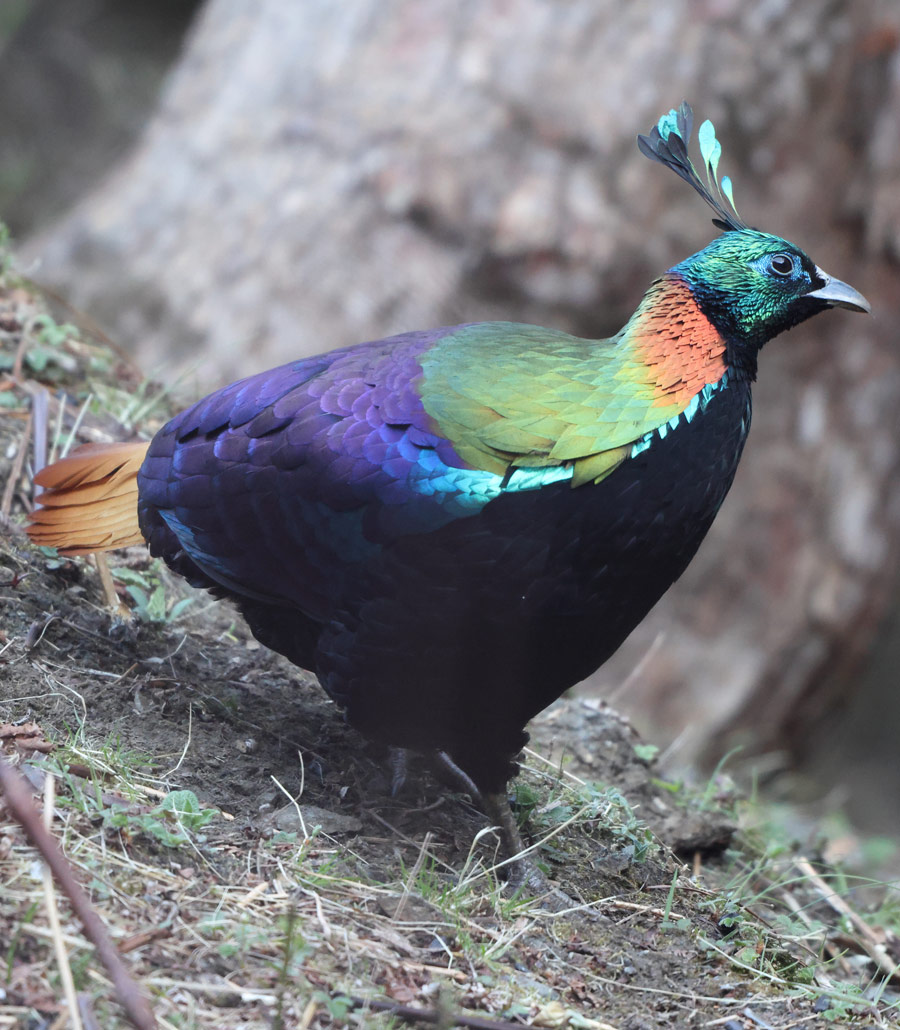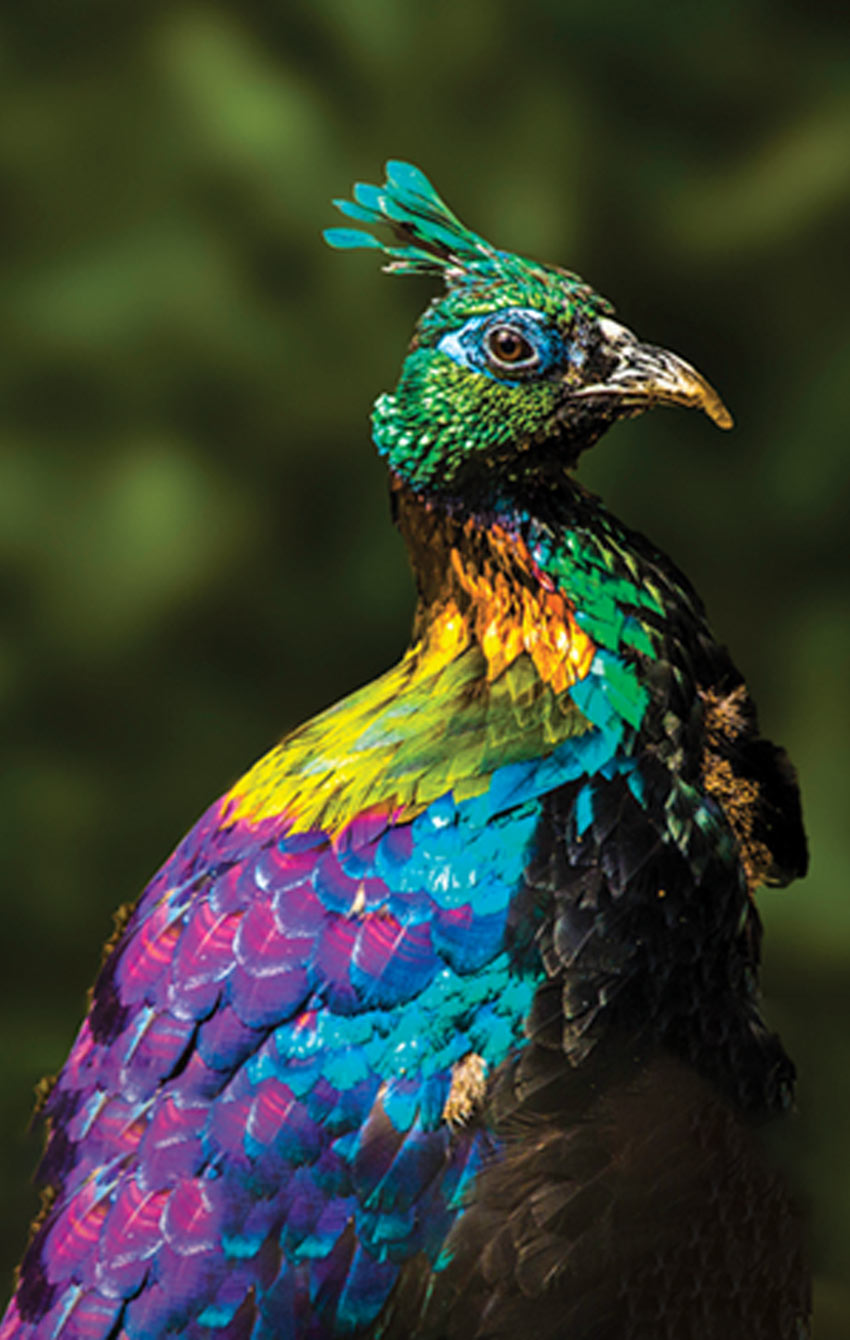
Himalayan Monal
Scientific Name: Lophophorus impejanus
Fast Facts
- Natural Habitat: Forests interspersed with grassy slopes, cliffs and alpine meadows.
- Distribution: Afghanistan, Bhutan, China, India, Myanmar, Nepal and Pakistan
- Lifespan: 10–12 years
- Diet: Insects, seeds, tubers, roots and berries.
- Weight: 2–2.4 kg
Behaviour
The Himalayan Monal is a social bird that is often seen in pairs or small groups. They spend the majority of their time during the day foraging by using their curved bill to dig underground. They are very communicative with a wide range of calls that express aggression, alarm or when trying to attract a mate.
Reproduction
Himalayan Monals are monogamous and form strong bonds during the mating season from April to August. The female will scrape a nest into the ground and lay 3–5 eggs which she incubates for 27 days. The male will remain near the nest for protection.
Conservation Status
Least Concern (LC)
Threats
The Himalayan Monal is under threat due to poaching for its beautiful, iridescent feathers which were once coveted for ceremonial dress. It also faces threats due to human disturbance causing habitat loss or from tourism. Climate change is also affecting this species as it is altering it’s native range.
Conservation
The Himalayan Monal holds cultural importance within Himalayan communities and features in local folklore and traditional art. It is now protected under Indian wildlife laws and is included under Schedule I of the Wildlife protection Act, 1972
Did You Know?
- Nepal designated the Himalayan Monal as its national bird in 1960.