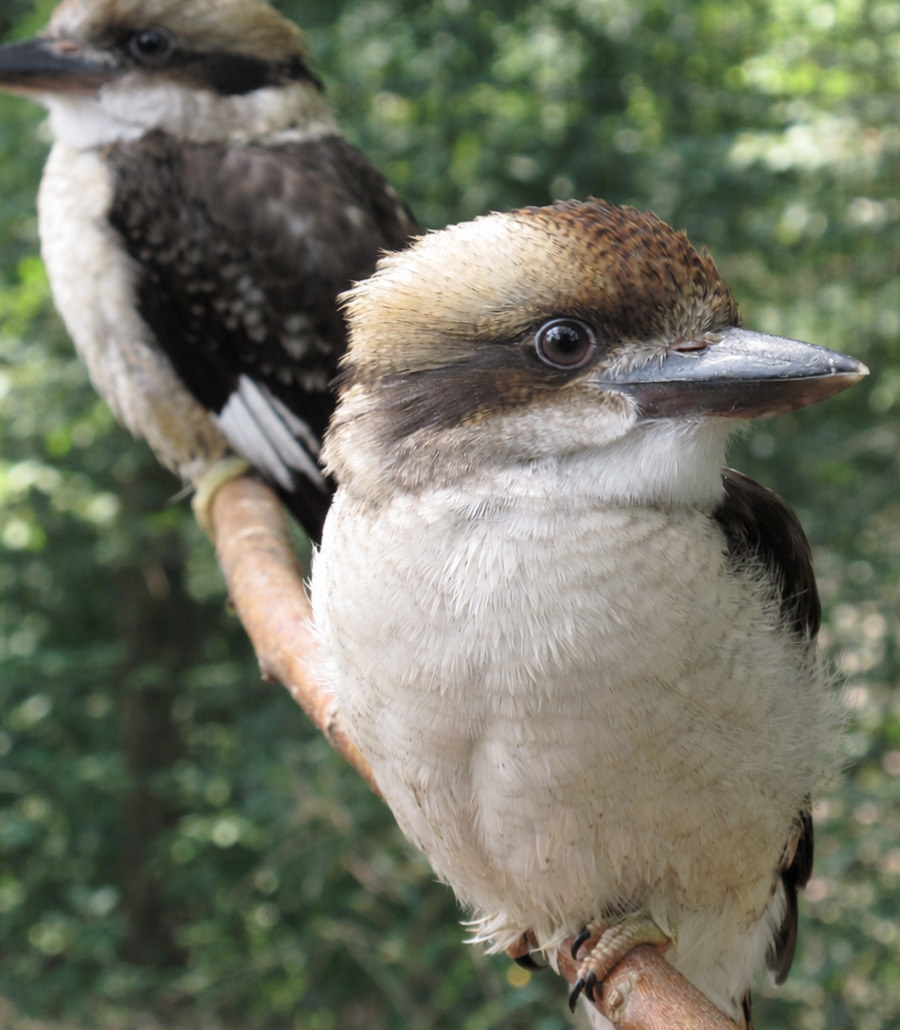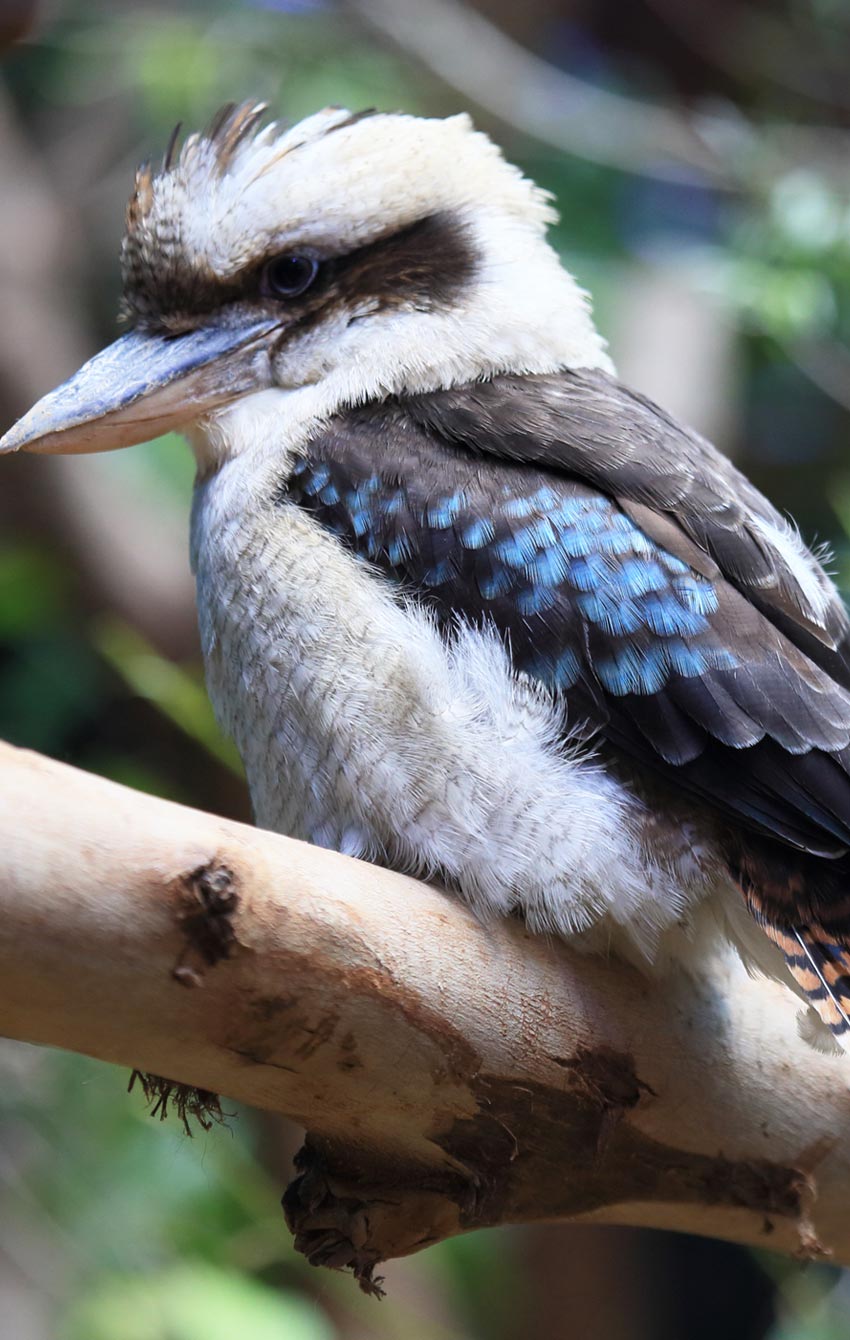
Laughing Kookaburra
Scientific Name: Dacelo novaeguineae
Fast Facts
- Natural Habitat: Eucalyptus forests, woodland areas and riverine habitats.
- Distribution: Australia and New Zealand
- Lifespan: Approximately 15 years
- Diet: Insects, small reptiles, rodents and small birds
- Weight: 300–480 g
Behaviour
The Laughing Kookaburra has a sit-and-wait strategy when hunting. It will sit upon a perch silently before swooping down on its prey, which it proceeds to kill by beating it against a branch or rock before swallowing it whole. The Laughing Kookaburra is a highly social bird that is usually found in small family groups which defend their territories against intruders.
Reproduction
Laughing Kookaburra’s are monogamous, with breeding pairs often lasting several breeding seasons. The breeding season lasts from August to January depending on the climate. They make their nests in natural tree hollows or termite mounds where the female will lay 2–4 eggs. Both parents and offspring from previous generations will help to incubate the eggs. These strong family bonds and cooperative breeding behaviours are unique among birds.
Conservation Status
Least Concern (LC)
Threats
The Laughing Kookaburra faces habitat destruction and fragmentation due to logging, agriculture and expansion of urban areas which has lead to a decrease in food availability and nesting sites.
Conservation
Initiatives that protect and restore the habitat that the Laughing Kookaburra lives in include replanting native vegetation, controlling invasive species and protecting key breeding and foraging areas.
Did You Know?
- They have been known to snatch food off barbecues, showcasing their fearless nature and adaptability to human presence.