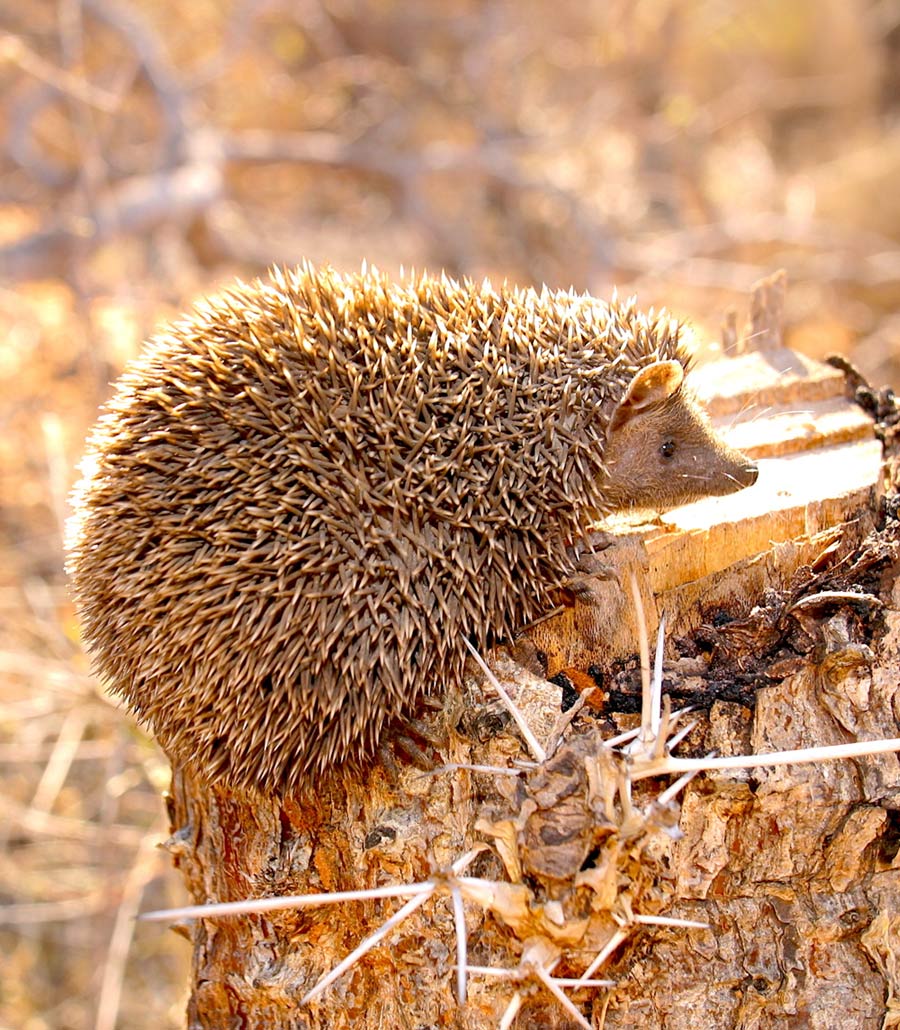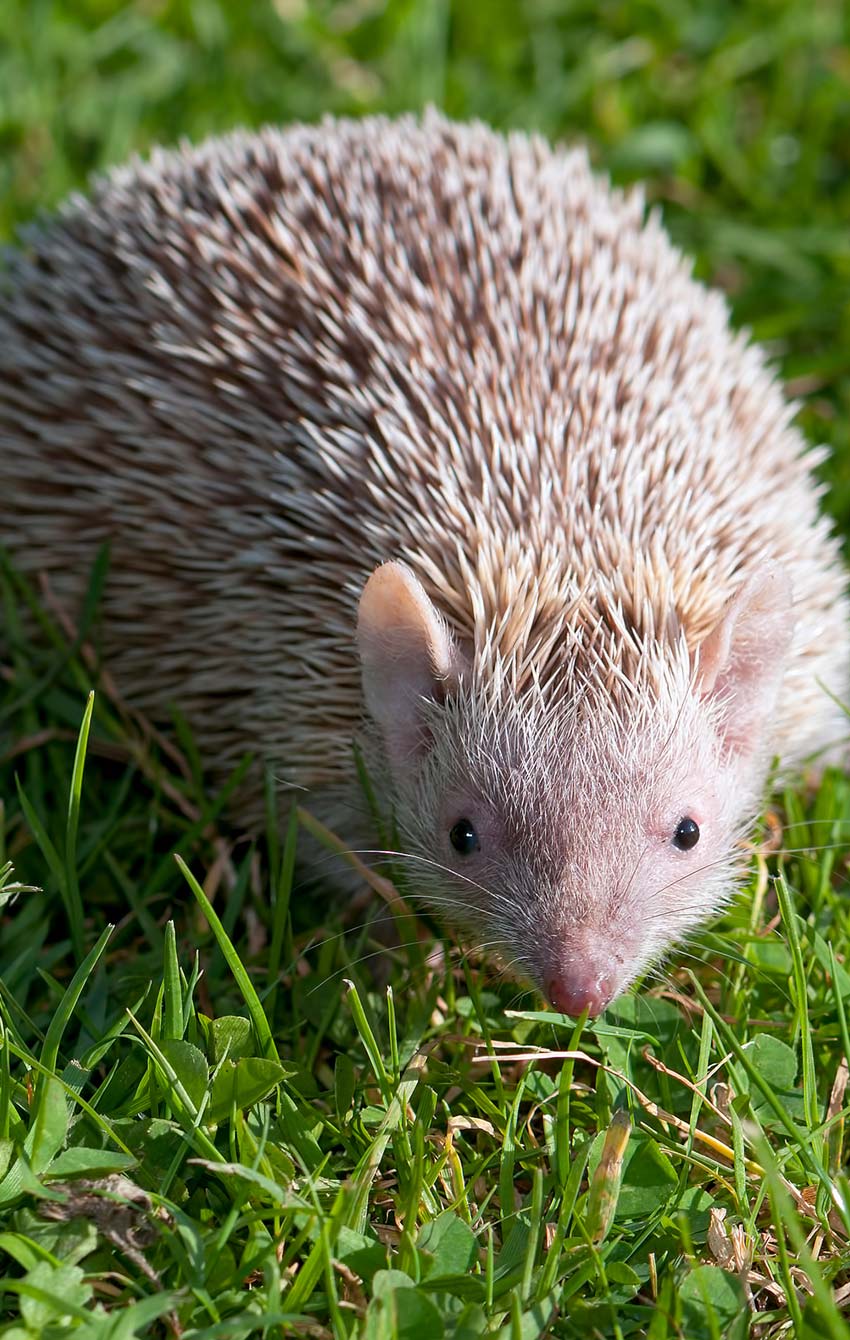
Lesser Hedgehog Tenrec
Scientific Name: Echinops telfairi
Fast Facts
- Natural Habitat: Dry forests, coastal region in scrub and semi-desert areas.
- Distribution: Southern and Southwestern Madagascar
- Lifespan: 8–10 years
- Diet: Insects
- Weight: 113–255 g
Behaviour
The Lesser Madagascar tenrec are nocturnal and therefore are primarily active at night. Sometimes they will use echolocation and clicking sounds to find their way in the dark. During the colder months, they go through torpor, a state of hibernation-like inactivity, for 3–5 months. They are covered in spines that do not extend to their stomach, this allows them to roll into a ball to protect themselves. Their spines are barbed at the end and detachable which would give predators a nasty surprise!
Reproduction
Usually Lesser Madagascar tenrecs give birth in the wet season when the maximum amount of prey is available. The female will give birth to 1–10 young, though 5–7 are most common. After only one month, the young become independent.
Conservation Status
Least Concern (LC)
Threats
Logging has decreased the population in some areas of their range. They also face threats due to fires, human encroachment, overhunting and introduced invasive species.
Conservation
Reduce, reuse, recycle. By reducing the use of single-use products we can help protect the environment and habitats of these animals.
Did You Know?
- Despite their name, the Lesser Madagascar hedgehog tenrec, is not a real hedgehog at all. Both species developed their similar spikes through a process called convergent evolution and the two species often get confused with each other.