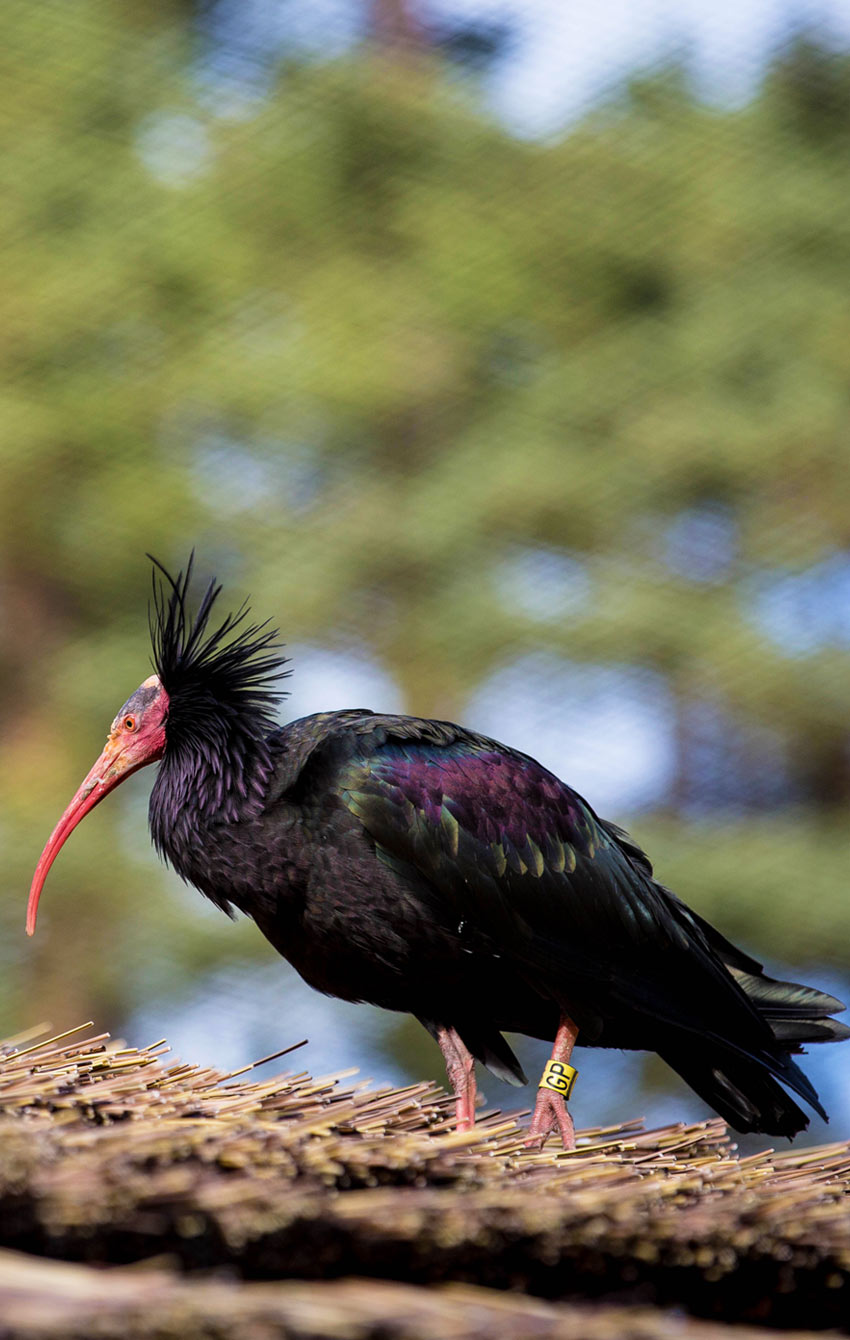
Northern Bald Ibis
Scientific Name: Geronticus eremita
Fast Facts
- Natural Habitat: Rocky cliffs and coastal or mountain ledges, areas near streams and rivers or semi-arid desert and steppe regions.
- Distribution: Morrocco and Syria, but it was once widespread over Europe (South of the Alps) and Northern Africa
- Lifespan: 10–15 years
- Diet: Insects (beetles, snails, scorpions, spiders and caterpillars) and other small animals like lizards, small mammals, ground nesting birds.
- Weight: 1–1.3 kg
Behaviour
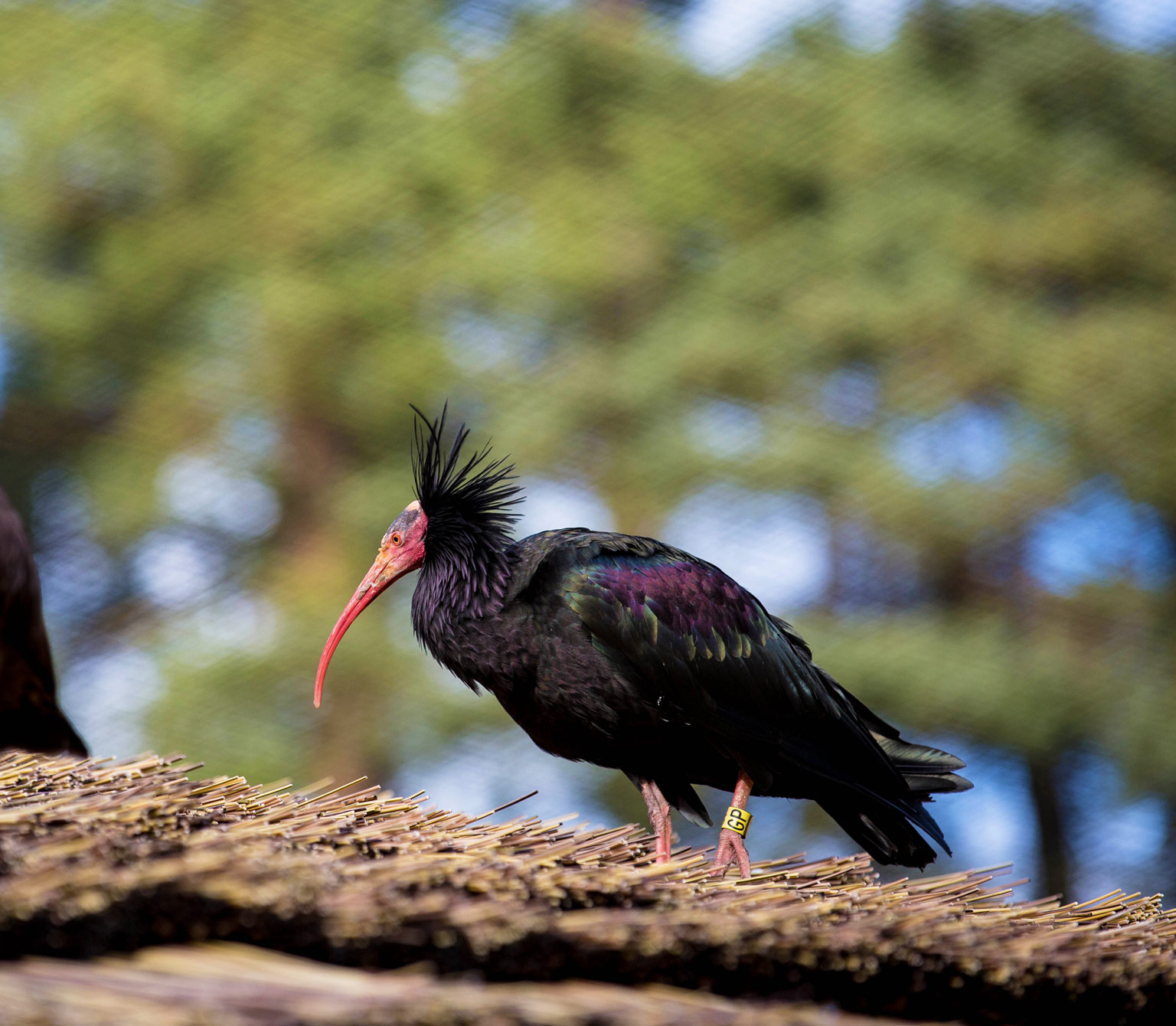
The Northern Bald Ibis lives in large flocks and unlike many members of the ibis family it is a non-wading bird. The Northern bald ibis forages by using its long bill to feel for food in the loose, sandy soil, where they mainly hunt by probing.
Reproduction
Pairs of Northern bald ibis bond for life after courtship. The male will display his crest and call to the female. Once they have established a bond, they will reinforce it through mutual grooming. The female will lay 2–4 eggs in a nest made of twigs, lined with straw or grass. Both parents incubate the egg for 24–25 days, and they both contribute to rearing the chicks, which takes 40–50 days.
Conservation Status
Endangered (EN)
Threats
The Northern bald ibis population has declined for several centuries and is now one of the most endangered bird species globally. This decline occurred due to a combination of factors including human persecution like hunting, loss of the steppes and non-intensive agricultural areas, pesticide poisoning, disturbance and dam construction.
Conservation
There is a reintroduction project underway in Europe with breeding colonies in Burghausen, Kuchl and Überlingen. The countries involved have been proactive in dealing with the threats to the species including combatting illegal hunting which has reduced poaching losses by nearly half, and dealing with electrocution threats by retrofitting high-risk pylons in key breeding areas.
Did You Know?
- Austria pioneered human-led migration for this species reintroduction by having the closely bonded human foster parents guide the birds in planes to help them learn migration routes.