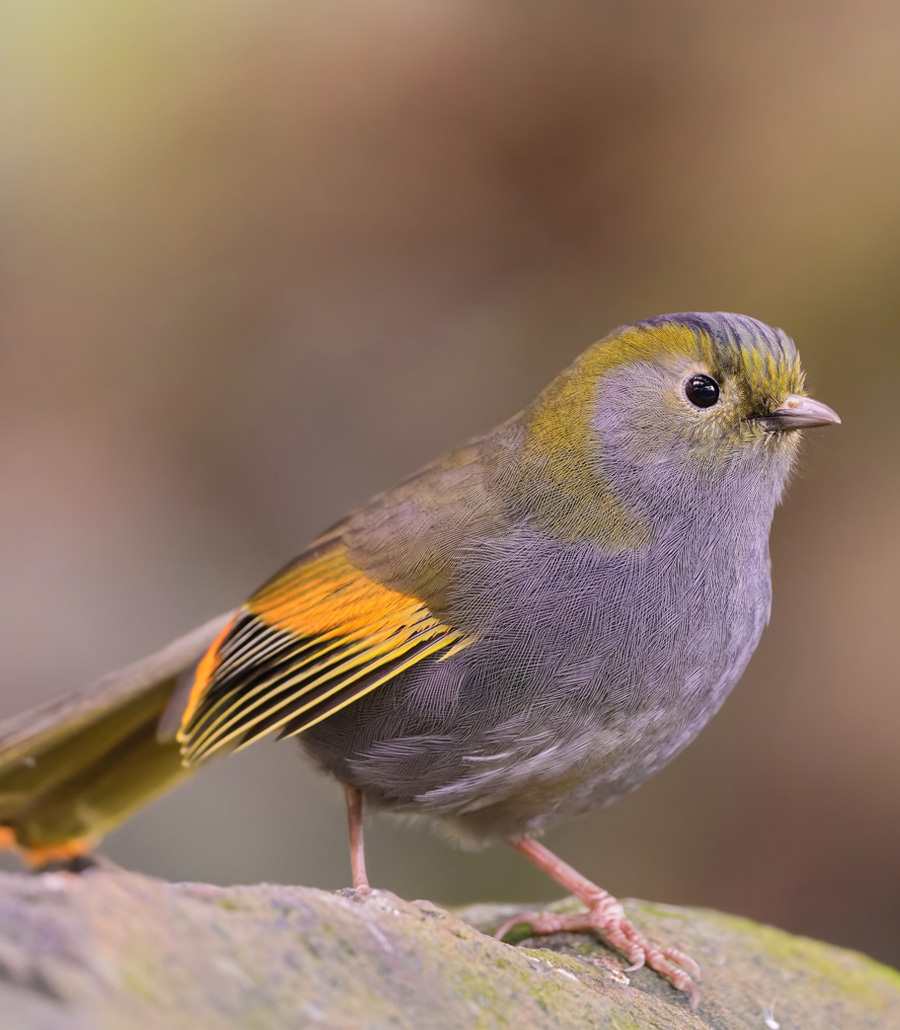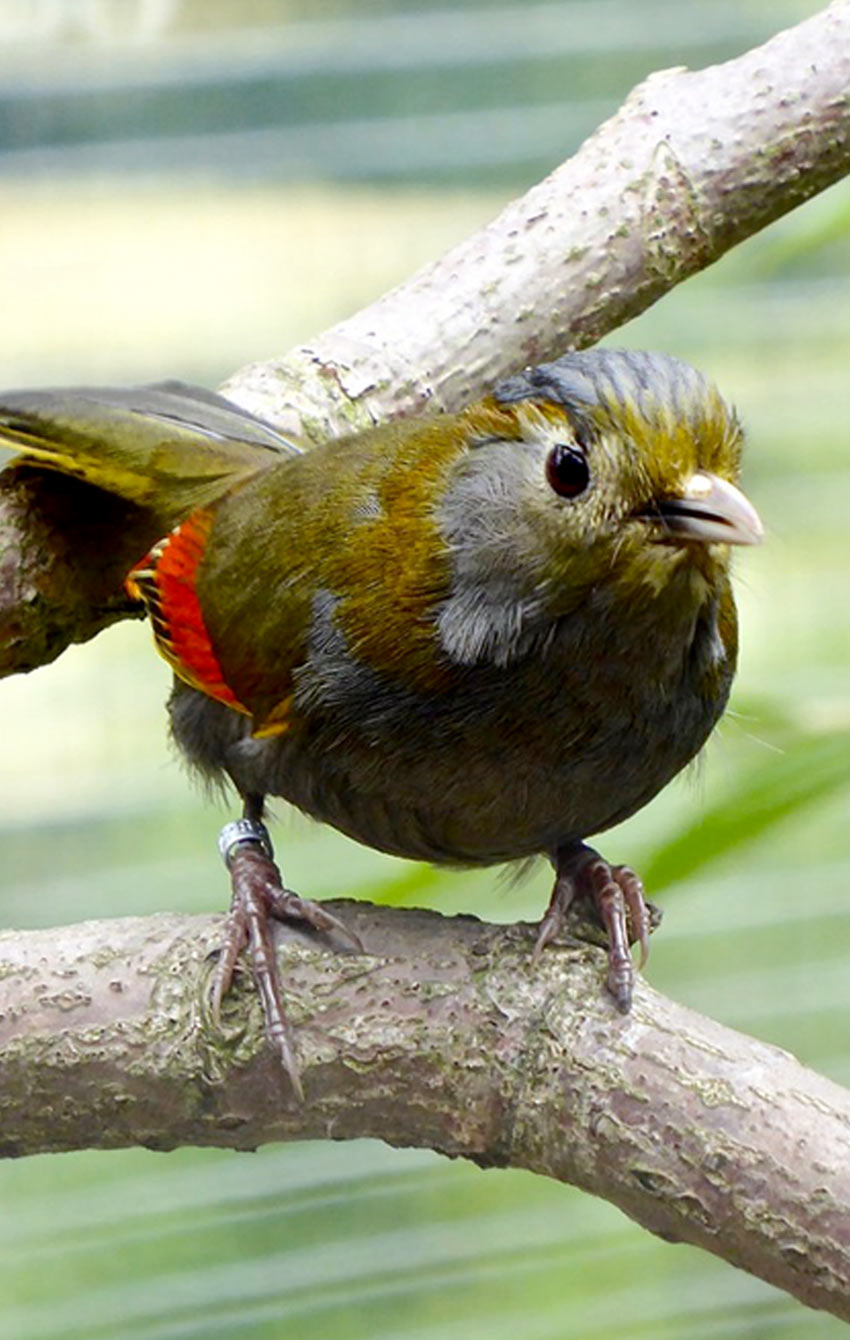
Mount Omei Babbler
Scientific name: Liocichla omeiensis
Fast Facts
- Natural Habitat: Montane Forests
- Distribution: Southwestern China
- Lifespan: 8–10 years
- Diet: Insects, Small Invertebrates, and some seeds and berries when available..
- Weight: 30–35 g
Behaviour
The Mount Omei babbler is found on its own, in pairs or in small flocks of 3–4 individuals. It is also territorial year-round which is unusual for babblers and laughing thrushes. Mount Omei babblers forage close to the ground, searching through low shrubs and leaf litter for food. They are a very secretive species, but they are very good singers and can be located by their song. They are extremely active and vocal throughout the day.
Reproduction
The female will lay one egg per day, with incubation starting after the last egg has been laid. The female will typically lay 3–4 eggs, and both the male and female will incubate the eggs for 13–14 days. Both parents will feed the chicks a diet of invertebrates.
Conservation Status
Vulnerable (VU)
Threats
The main threats to the Mount Omei babbler include habitat loss and fragmentation which has occurred due to logging or conversion of habitat to agriculture. Other threats include trapping for the pet trade, human disturbance from bamboo shoot collectors and livestock grazing.
Conservation
A ban has been put on large scale commercial logging to help prevent further habitat loss and fragmentation. The Mount Omei babbler is a protected species in Sichuan and on the national list of protected species in China. It is also protected internationally through CITES Appendix II. Educational programmes are also in place to raise awareness of the issues surrounding the trapping and removal of wild birds from their natural habitats.
Did You Know?
- You can tell the difference between males and females as the males have colourful undertail-coverts!