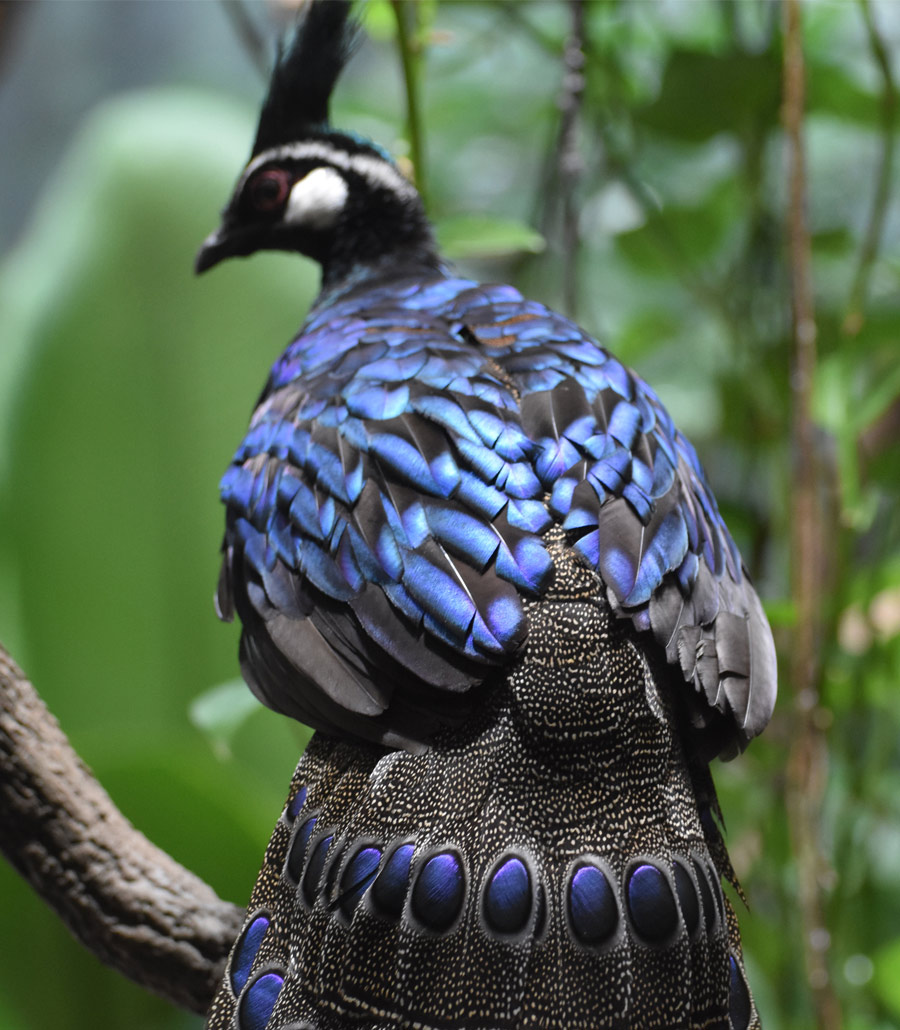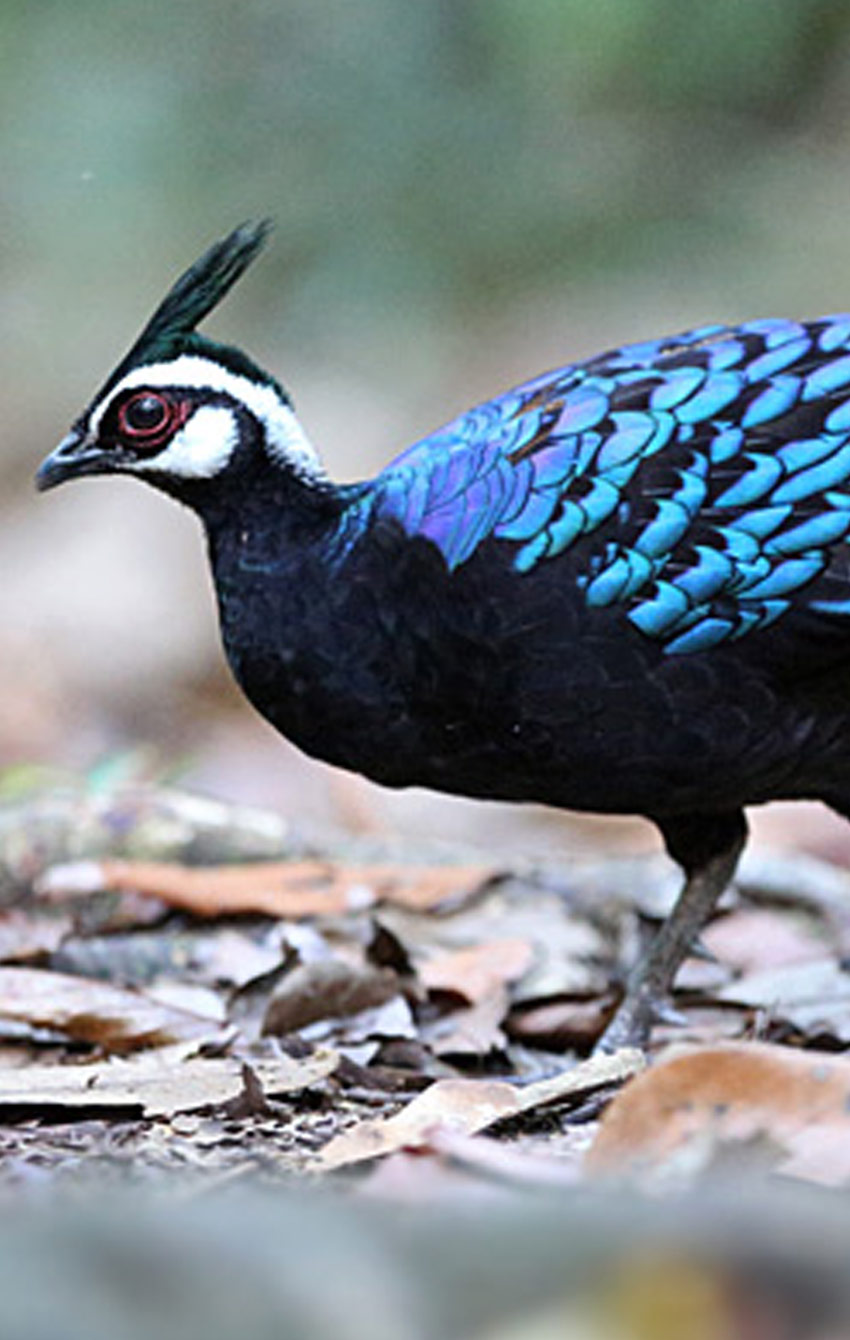
Palawan Peacock Pheasant
Scientific Name: Polyplectron napoleonis
Fast Facts
- Natural Habitat: Tropical rainforests
- Distribution: Palawan archipelago in the Philippines
- Lifespan: Approximately 15 years
- Diet: Various insects, seeds and small invertebrates.
- Weight: 180–275 g
Behaviour
The Palawan peacock-pheasant are skilled foragers that use their feet to uncover food on the forest floor hidden in leaf litter by scratching. They typically do this alone or in pairs. The birds are territorial with males often performing displays to assert dominance and attract mates.
Reproduction
The males perform elaborate displays that include fanning their tail feathers and performing intricate dances to attract the females. Once a pair forms, they exhibit a strong bond and both the male and female incubate the eggs and rear the offspring. Usually breeding occurs seasonally when food is abundant.
Conservation Status
Vulnerable (VU)
Threats
Habitat destruction is the greatest threat to the Palawan Peacock-Pheasant due to deforestation for timber, agriculture and urban development. This has resulted in the fragmentation of their habitat which has isolated populations making them more vulnerable. Climate change is another threat as it alters the ecosystems in the Palwan forests which affects food availability and nesting sites.
Conservation
Protected areas have been established and enforced which gives the Palawan peacock pheasant the opportunity to live and breed without the threat of habitat destruction. There are also reforestation projects which aim to restore degraded habitats and connect fragmented forests together. Education and community involvement are vital as they promote sustainable practices that benefit the environment and the people.
Did You Know?
- Despite their colourful appearance, these birds are remarkably adept at camouflaging themselves in their forest environment.