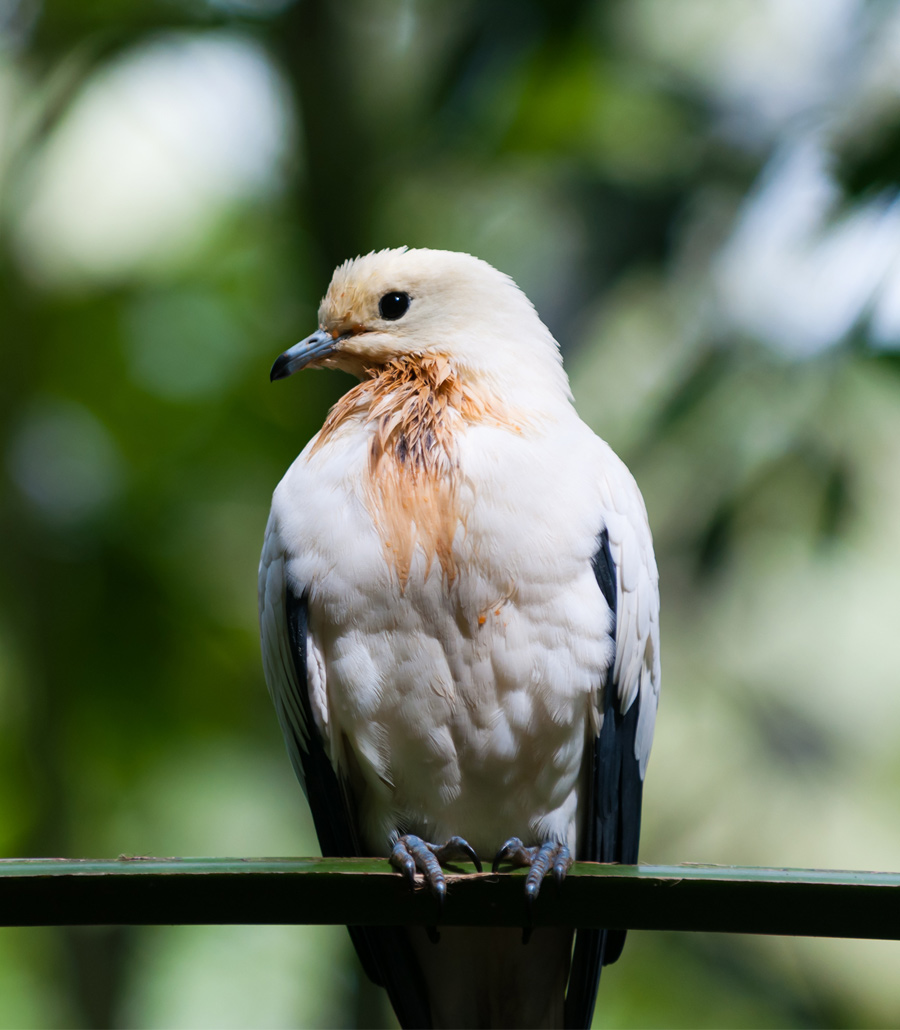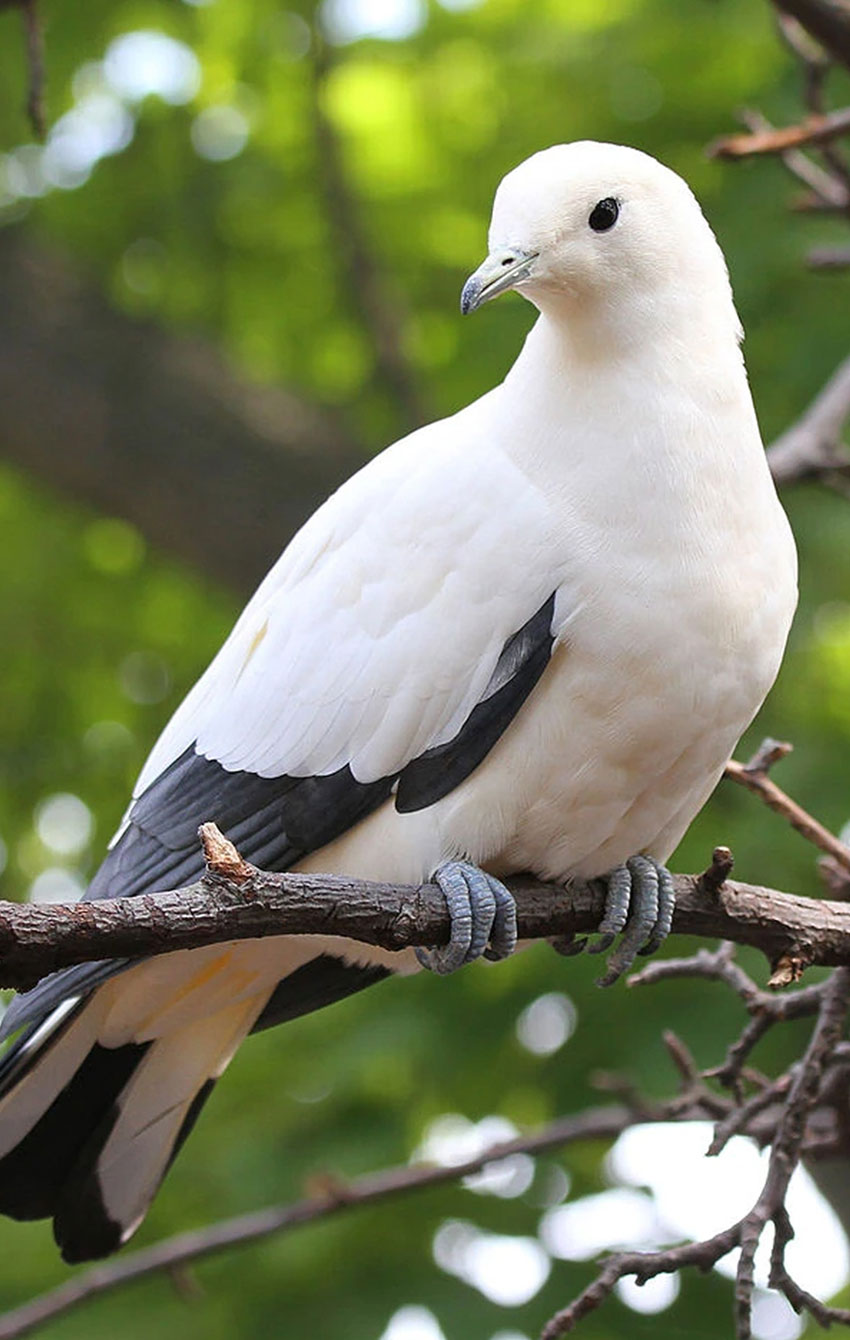
Pied Imperial Pigeon
Scientific Name: Ducula bicolor
Fast Facts
- Natural Habitat: Coastal mangroves, islands and wooded areas near the sea
- Distribution: Brunei, Cambodia, India, Indonesia, Malaysia, Myanmar, Philippines, Singapore, Thailand, Vietnam
- Lifespan: Approximately 10 years
- Diet: Fruits, especially figs and nutmeg. Occasionally some insects or small invertebrates.
- Weight: 370–480 g
Behaviour
The Pied imperial pigeon will eat fruits whole, then regurgitate the seeds later. This plays an important role in seed dispersal in its native habitats. They are a social bird that forms large flocks, especially during foraging and roosting. These large flocks can number in the 100s and offer protection against predators.
Reproduction
The Pied imperial pigeon has a monogamous mating season with pairs forming for the season and occasionally beyond. The male will puff its feathers up and coo loudly to attract a mate. Once a bond has formed, both pigeons will help to build a nest. The female will lay 1–2 eggs and both parents will take turns incubating. The eggs hatch after 20 days.
Conservation Status
Least Concern (LC)
Threats
Habitat loss due to deforestation and land conversion for agriculture. In some areas the Pied imperial pigeon is hunted for meat and the pet trade.
Conservation
Habitat preservation and the establishment of protected areas to safeguard crucial breeding and feeding grounds to ensure the species long-term survival. Research into the species ecology and behaviour is ongoing as this will inform future conservation strategies.
Did You Know?
- The Pied imperial pigeon has been observed to consume mineral-rich soil. This is thought to aid digestion.