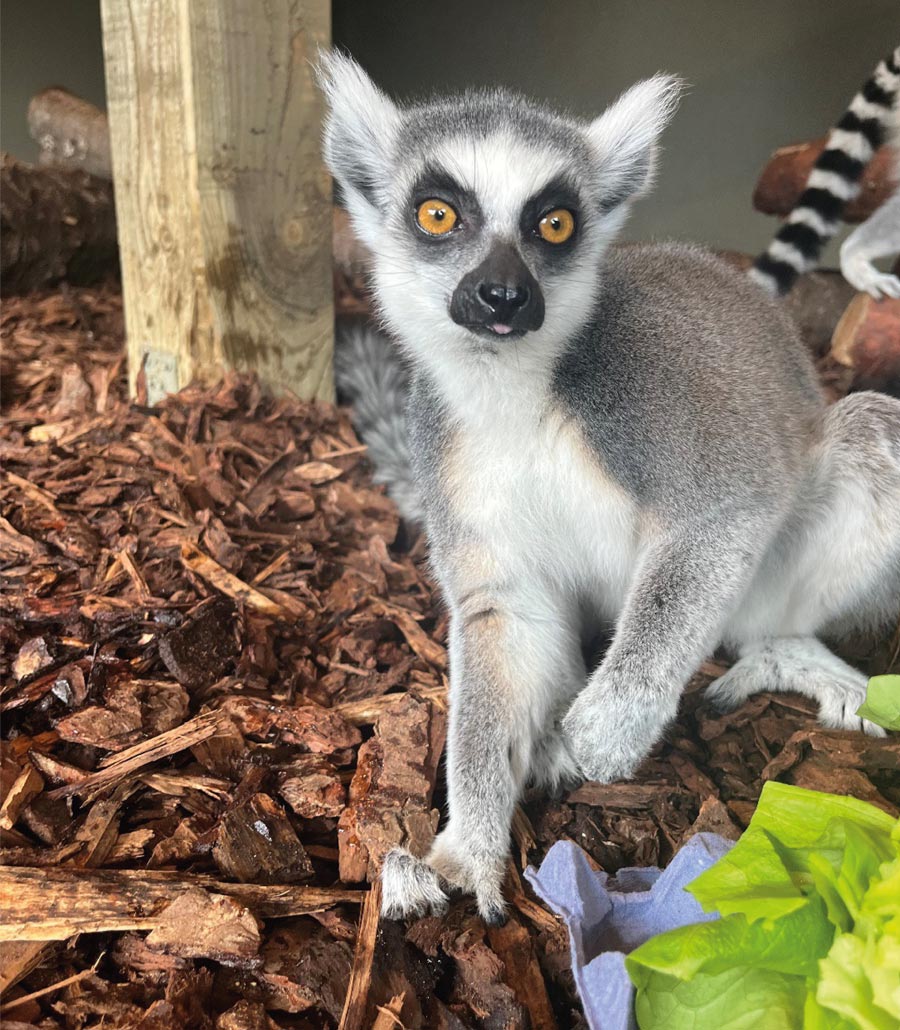
Ring-tailed lemurs
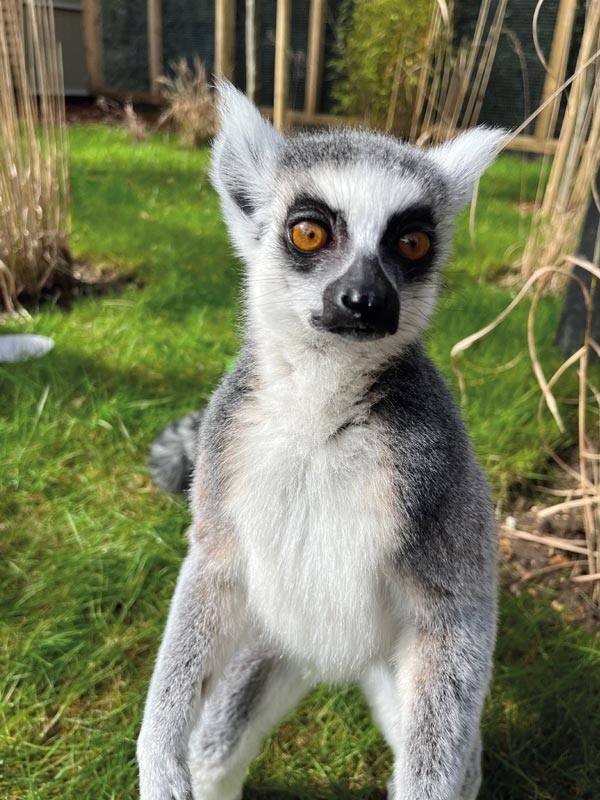
Scientific Name: Lemur catta
Fast Facts
- Natural Habitat: Dry forests, montane forests, rocky outcrops and rainforests
- Distribution: Madagascar
- Lifespan: 15–33 years
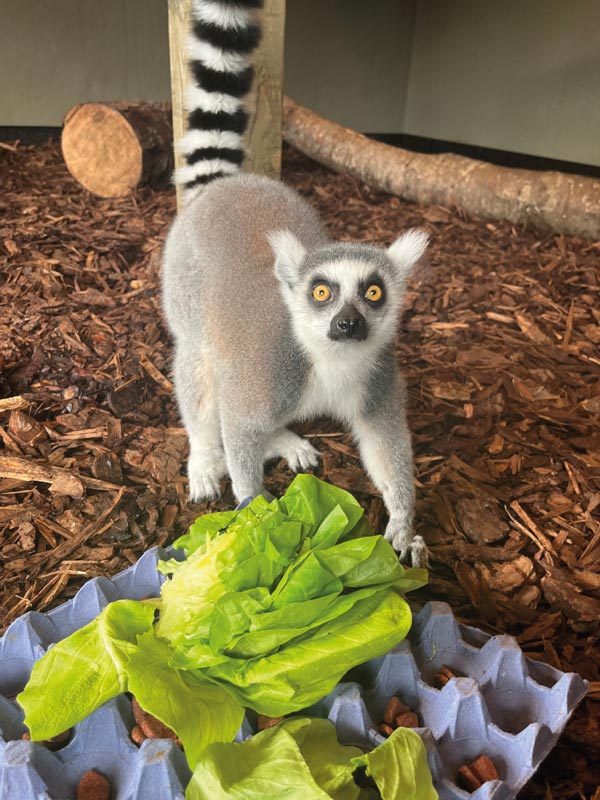
- Diet: Fruit, leaves, flowers and occasionally invertebrates such as insects and spiders
- Weight: 2.5–3 kg
Behaviour
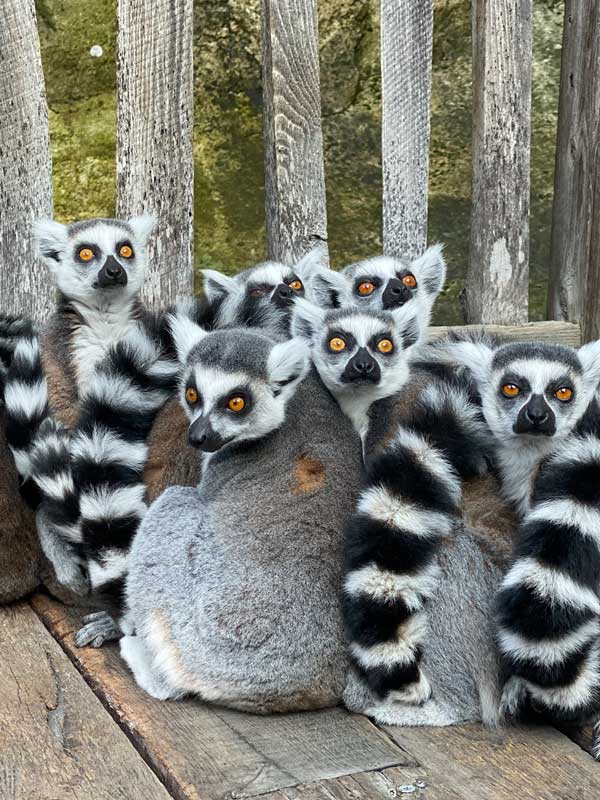
Ring-tailed lemurs live in groups known as troops, which can include 6–30 individuals. Both males and females live in these troops, but a dominant female leads the group. Females remain in the troop they were born into, whereas males migrate to other troops.
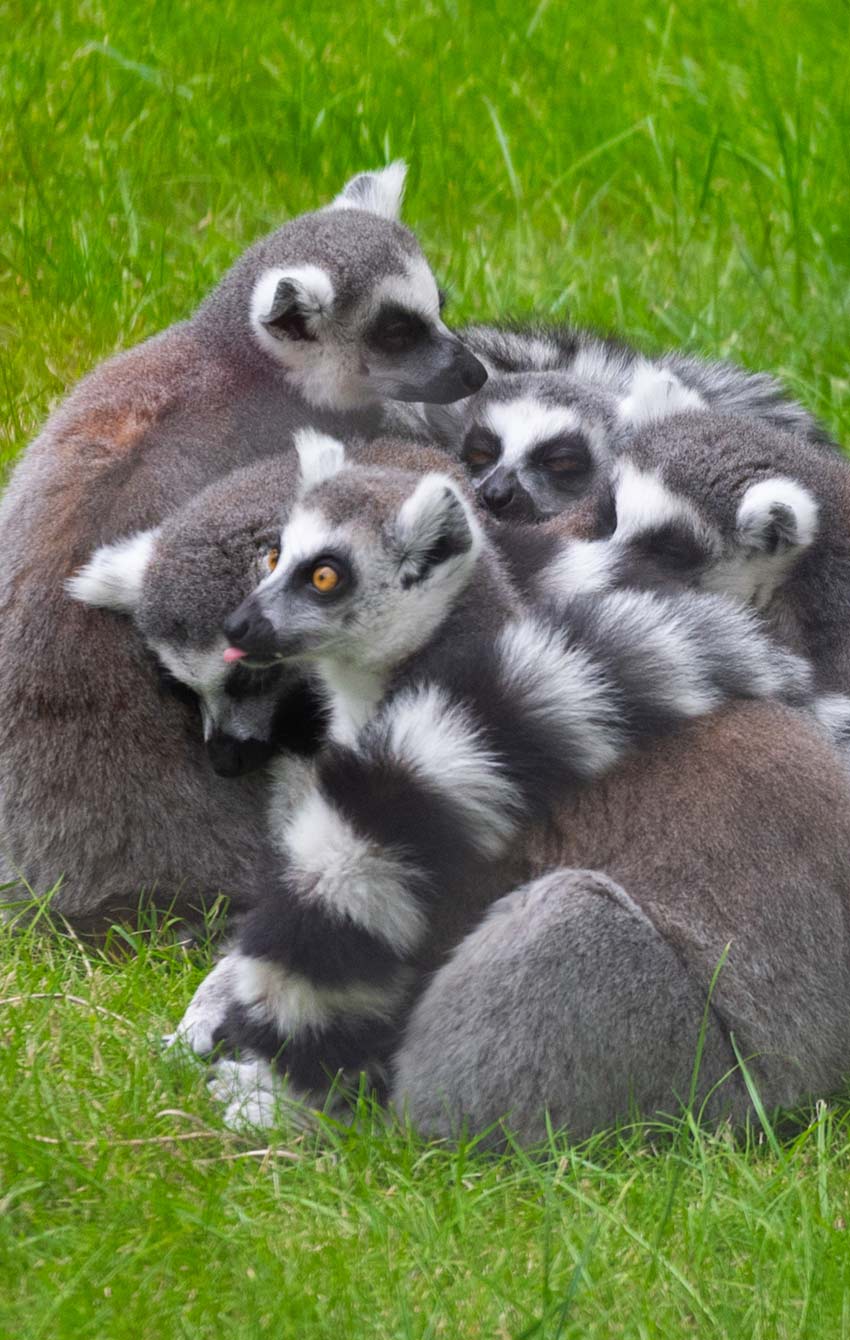
Ring-tailed lemurs are highly social and are often found huddled together or grooming one another. They communicate in many ways, including scent marking, tail-waving, stink fights, vocalisations and visual signals such as facial expressions.
Unlike most lemur species, which are arboreal and nocturnal, ring-tailed lemurs are diurnal and semi-terrestrial, spending approximately one-third of their time on the ground.
Reproduction
Both males and females have multiple partners, a mating system known as polygynandry. Mating usually occurs between April and June, and the gestation period for a ring-tailed lemur is approximately 4–4.5 months.
Females usually give birth to one or two infants. Mothers are very attentive and will shelter, groom, feed and carry their offspring on their abdomen or back.
Conservation Status
Endangered (EN)
Threats
Ring-tailed lemurs face several threats, including habitat loss, hunting for food and capture for the illegal pet trade.
Their habitat is being lost due to annual burning practices used to create new pasture for livestock. Deforestation and the felling of trees for coal production also affect this species.
Climate change poses an additional risk through drying conditions and severe weather events, including cyclones, storms and floods.
Conservation
Ring-tailed lemurs are listed under Appendix I of CITES. Of the eight known populations containing more than 100 ring-tailed lemurs, two are found in national parks, five in protected areas, and the remaining population is in an area that is currently unprotected but may receive protection in the future.
Did You Know?
Ring-tailed lemurs have strong scent glands and engage in "stink fights" when competing for dominance, particularly during the mating season.
Males cover their tails with smelly secretions before waving them in the air to determine which animal is more powerful.