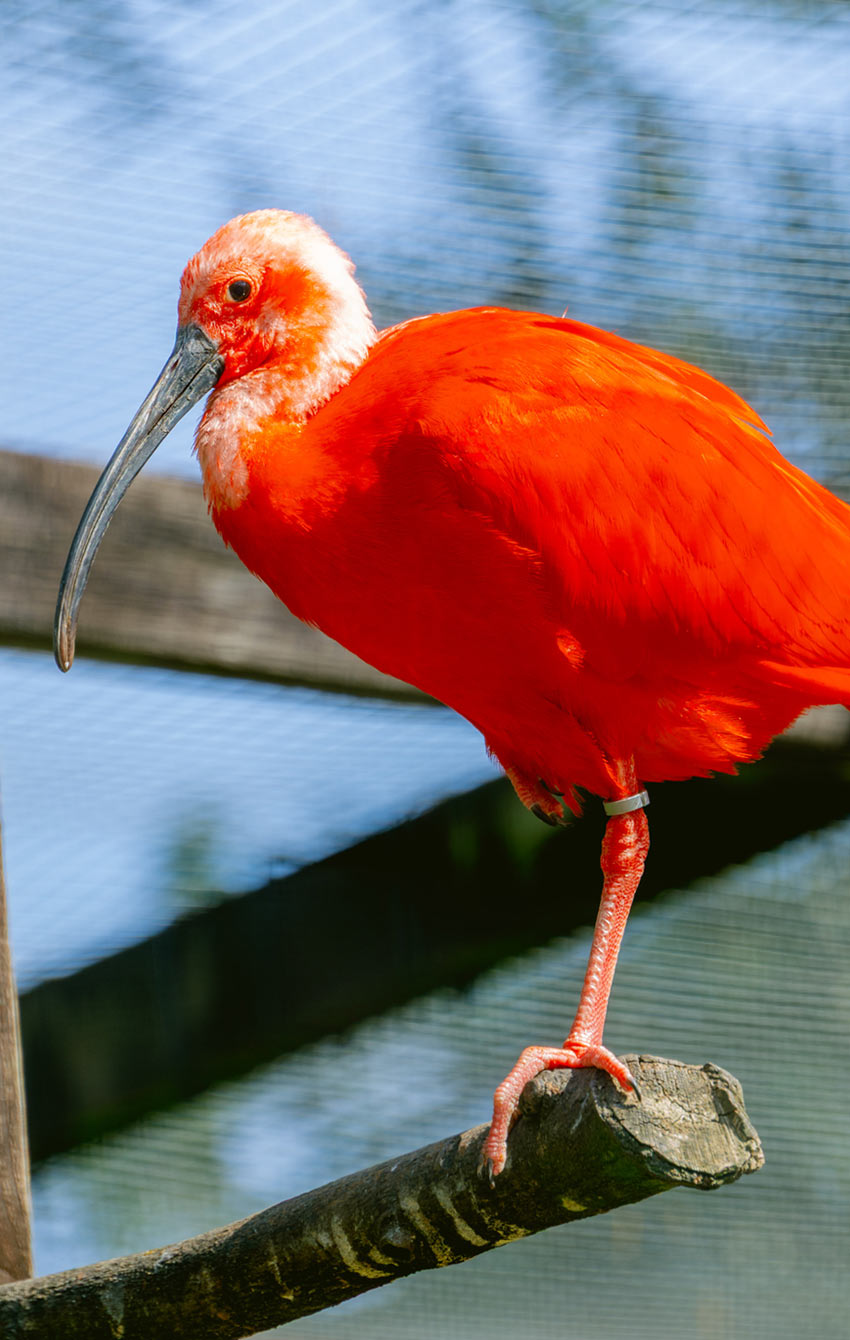
Scarlet Ibis
Scientific Name: Eudocimus ruber
Fast Facts
- Natural Habitat: Mudflats, estuaries, shorelines and shallow bays.
- Distribution: Argentina, Belize, Brazil, Colombia, Cuba, Dominica, Ecuador, Grenada, Guyana, Jamaica, Panama, Suriname, Trinidad and Tobago, United States and Venezuela.
- Lifespan: Approximately 20 years
- Diet: Crustaceans, molluscs, fish, insects, frogs and small snakes
- Weight: 1.3–1.5 kg
Behaviour
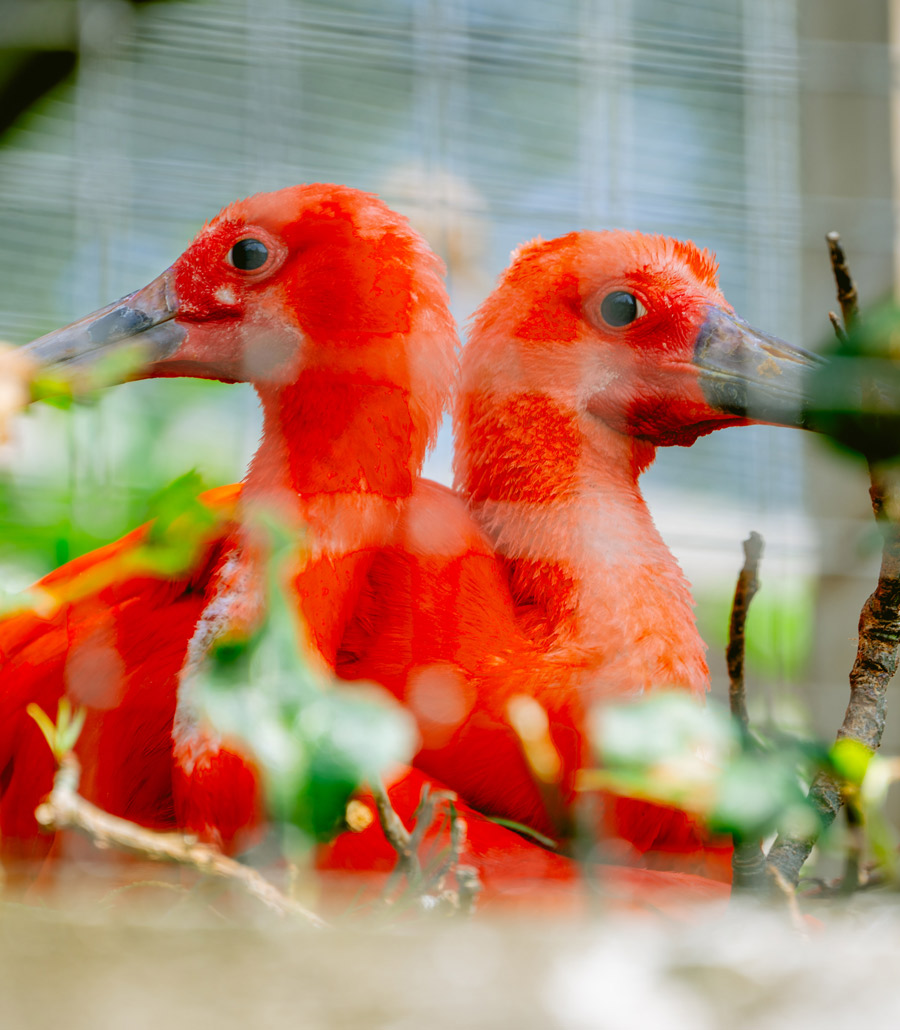
The Scarlet ibis find crabs, shrimps and other small aquatic animals by using their long, curved beak to probe in the soft mud or shallow waters for prey. This high in carotenoid diet is what gives the bird its distinctive red colour. The Scarlet ibis is a highly social bird that is often found in large flocks that can consist of 100s of individuals. They will forage, roost and nest together in flocks. Scarlet ibises do not start their lives with their bright red feathers, the chicks are born with black feathers and as they mature and eat their carotene-rich diet, they will moult and develop the bright red plumage!
Reproduction
Males will perform elaborate displays during the breeding season including preening, bill rubbing and elaborate flights. Once a pair has formed, they will mutually groom each other and build a nest together in a mangrove tree or other safe location. Both parents will help to incubate the egg and raise the young.
Conservation Status
Least Concern (LC)
Threats
Habitat destruction due to development and agricultural expansion. They also face threats due to pollution in water bodies as this affects the species food sources and nesting sites. They are also hunted and trapped for the pet trade, their meat and feathers which has contributed to localised declines.
Conservation
Primarily, conservation efforts are focused on habitat protection and restoration. This has included the creation or designation of protected areas in key breeding and feeding sites as well as efforts to restore the degraded wetlands and mangroves.
Did You Know?
- Birds with parasites cannot retain as many carotenoids and therefore have duller plumage. During breeding, the males with the brightest red plumage signal that they have good health and are therefore more attractive to the females.