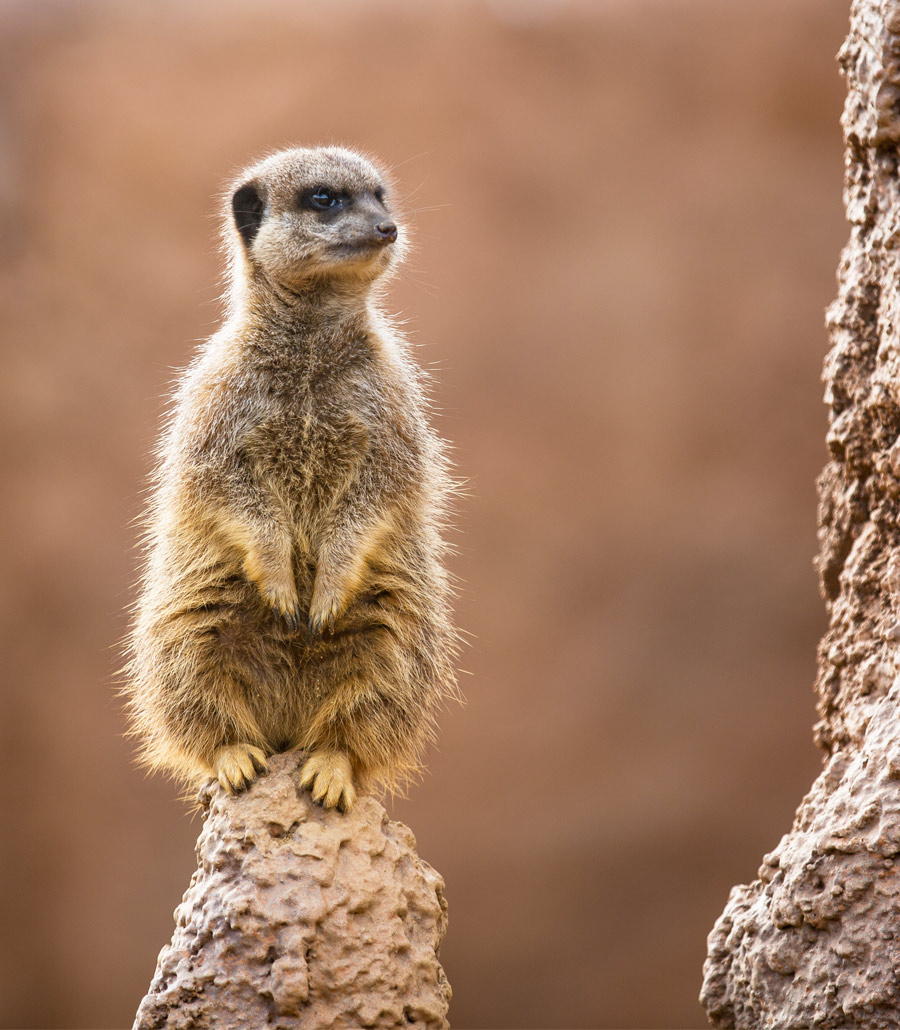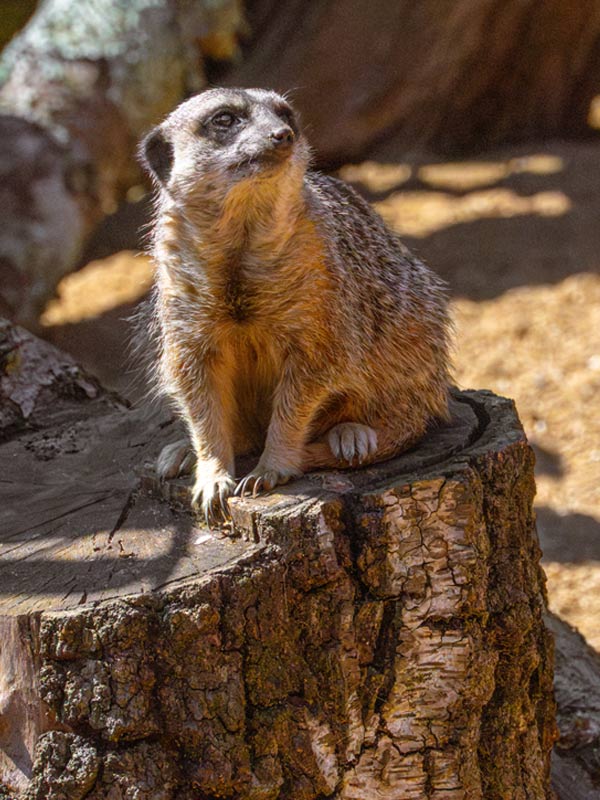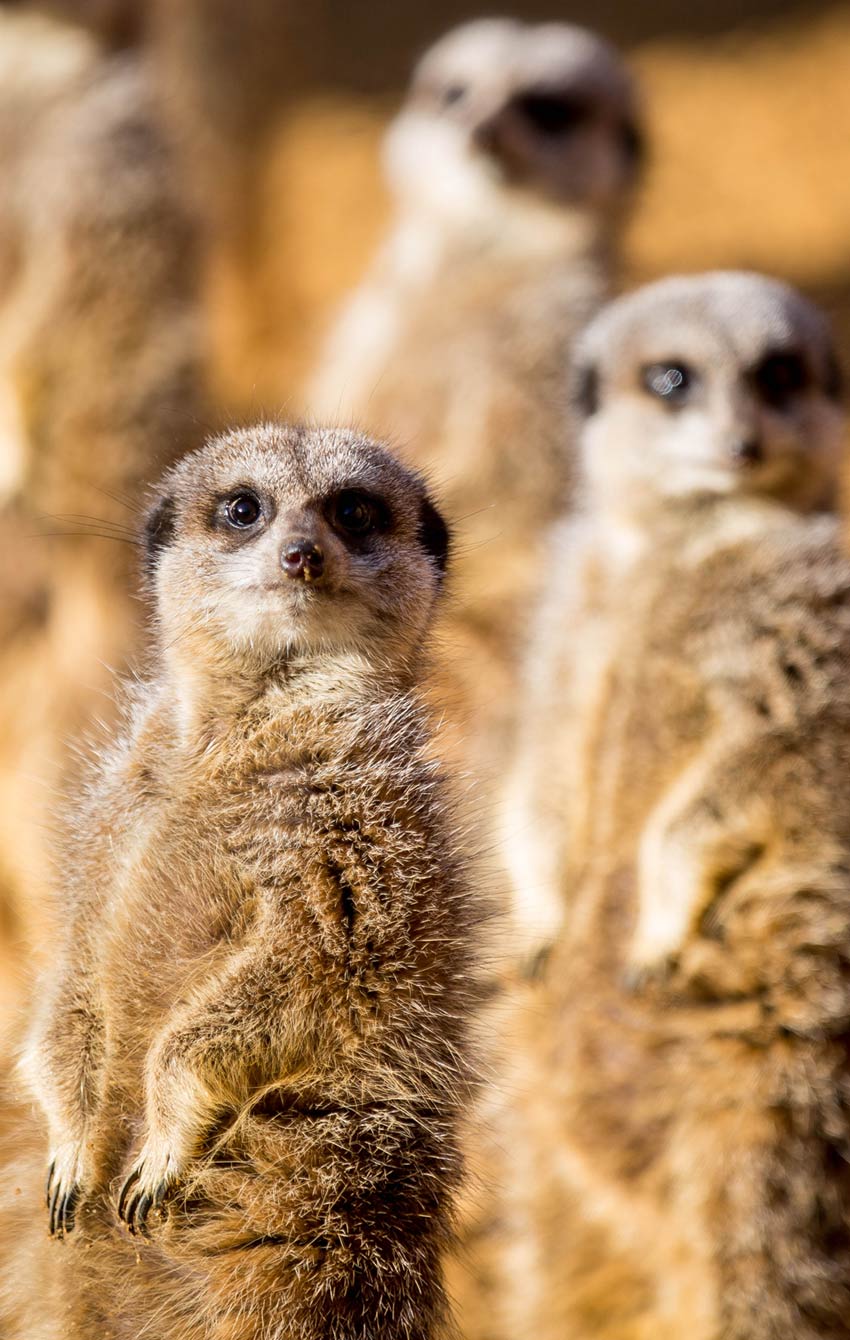
Slender-tailed Meerkat
Scientific Name: Suricata suricatta
Fast Facts
- Natural Habitat: Arid deserts like the Kalahari and Namib deserts
- Distribution: Angola, Botswana, Namibia and South Africa
- Lifespan: Approximately 10 years
- Diet: Beetles, Caterpillars, Spiders and Scorpions. Small vertebrates like rodents, birds, eggs and snakes. They also consume roots, fruited and tubers which is where they get their water from.
- Weight: 0.6–1 kg
Behaviour
Meerkats use their sharp claws and keen sense of smell to dig up their prey from underground. Foraging for food takes up the majority of a Meerkats Day. They are a highly social matriarchal society that live in groups called mobs that are made up of 20–50 individuals. They often exhibit sentry behaviour, where one Meerkat will stand on it’s back legs to stand guard and alert the others to any danger.
Reproduction
Only the matriarch breeds with the dominant male. The rest of the mob help to take care of the offspring. The gestation period for the female is around 11 weeks, after which she gives birth to 2–5 pups.
Conservation Status
Least Concern (LC)
Threats
In some regions habitat loss due to human encroachment and climate change can pose threats to the Meerkat. They also face threats due to the exotic pet trade.
Conservation
Meerkats benefit from broader conservation programmes that are aimed at preserving their habitats, which in turn offers them a safe environment free from human encroachment.
Did You Know?
- They can close their ears to prevent sand from entering while digging.