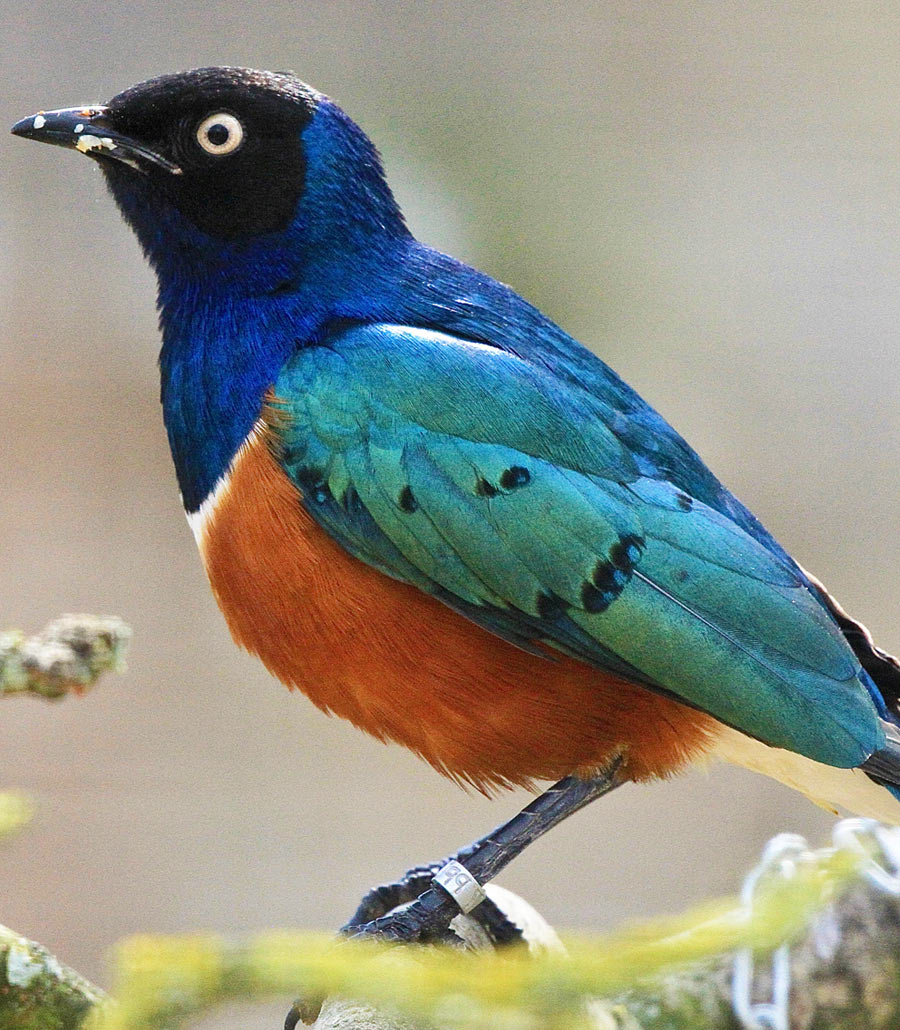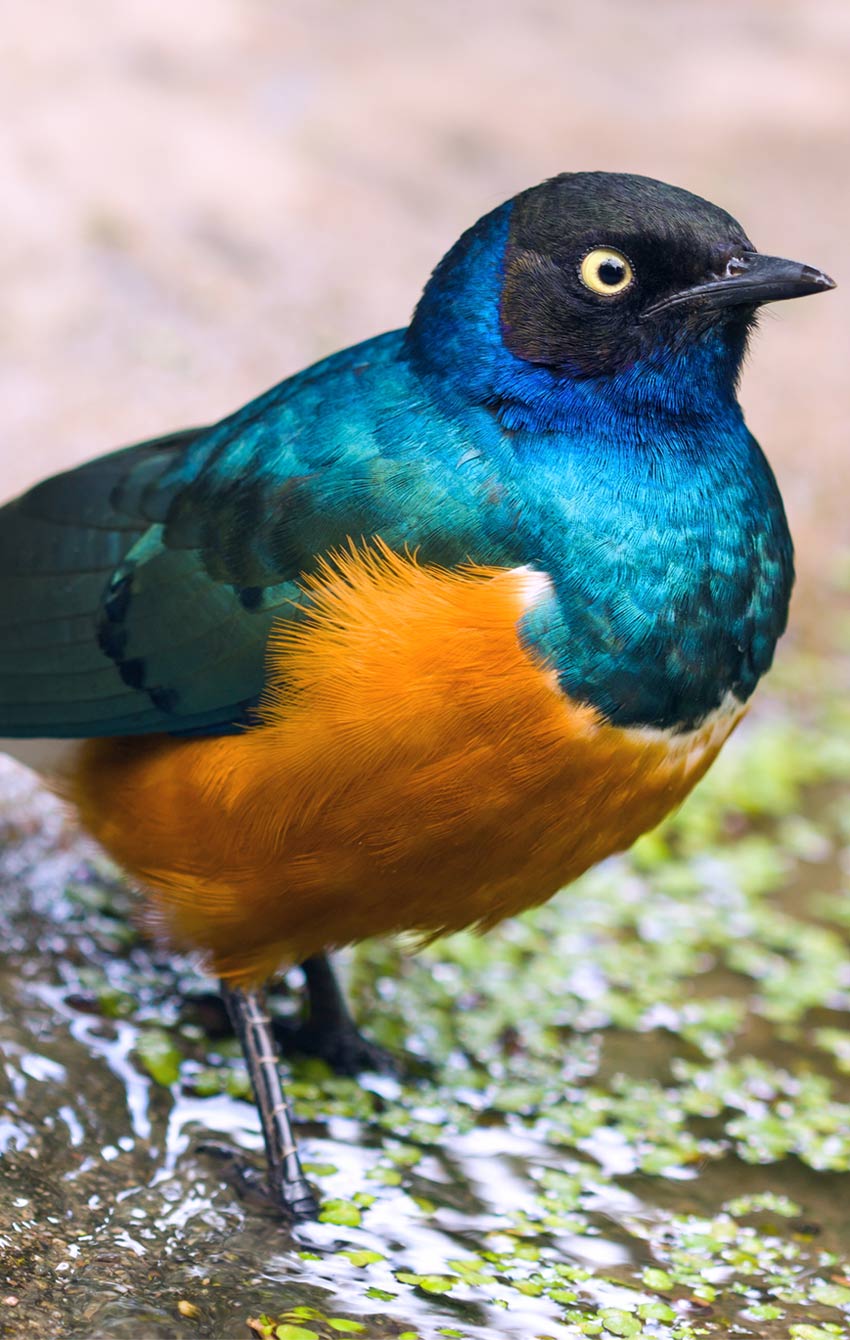
Superb Spreo Starling
Scientific Name: Lamprotornis superbus
Fast Facts
- Natural Habitat: Savanna, Woodlands and grasslands
- Distribution: Ethiopia, Kenya, Somalia, South Sudan, Sudan, Tanzania, Uganda
- Lifespan: Approximately 15 years
- Diet: Insects such as beetles and termites, seeds, fruits, and occasionally small rodents and reptiles.
- Weight: 80–100 g
Behaviour
The Superb starling is an opportunistic feeder and will forage on the ground by probing the soil with their sharp beaks for hidden food. They live in large flocks of up to 30 individuals. These groups will include the dominant male, subordinate males, females and juveniles. They will all defend their territory from predators and rival starling.
Reproduction
The Superb starling has a unique mating system known as ‘cooperative polygyny’. This is where one dominant male will mate with multiple females. These groups consist of the dominant male, several females and subordinate males who help to raise the offspring but do not mate with the females themselves. Usually breeding occurs in the rainy season when food is plentiful. The female will lay 2–5 eggs in a nest inside a tree hole or crevice. Then both parents and the helpers will share the work incubating the eggs and feeding the chicks.
Conservation Status
Least Concern (LC)
Threats
The main threats to the Superb starling include habitat loss due to deforestation and changes in land use. Occasionally they are hunted for their bight plumage or captured for the pet trade.
Conservation
There are no targeted conservation methods, however the Superb starling will benefit from general conservation measures across their range including habitat protection and pollution control.
Did You Know?
- The Superb Starling’s scientific name, ‘Lamprotornis superbus,’ roughly translates to ‘magnificent shiny bird.’