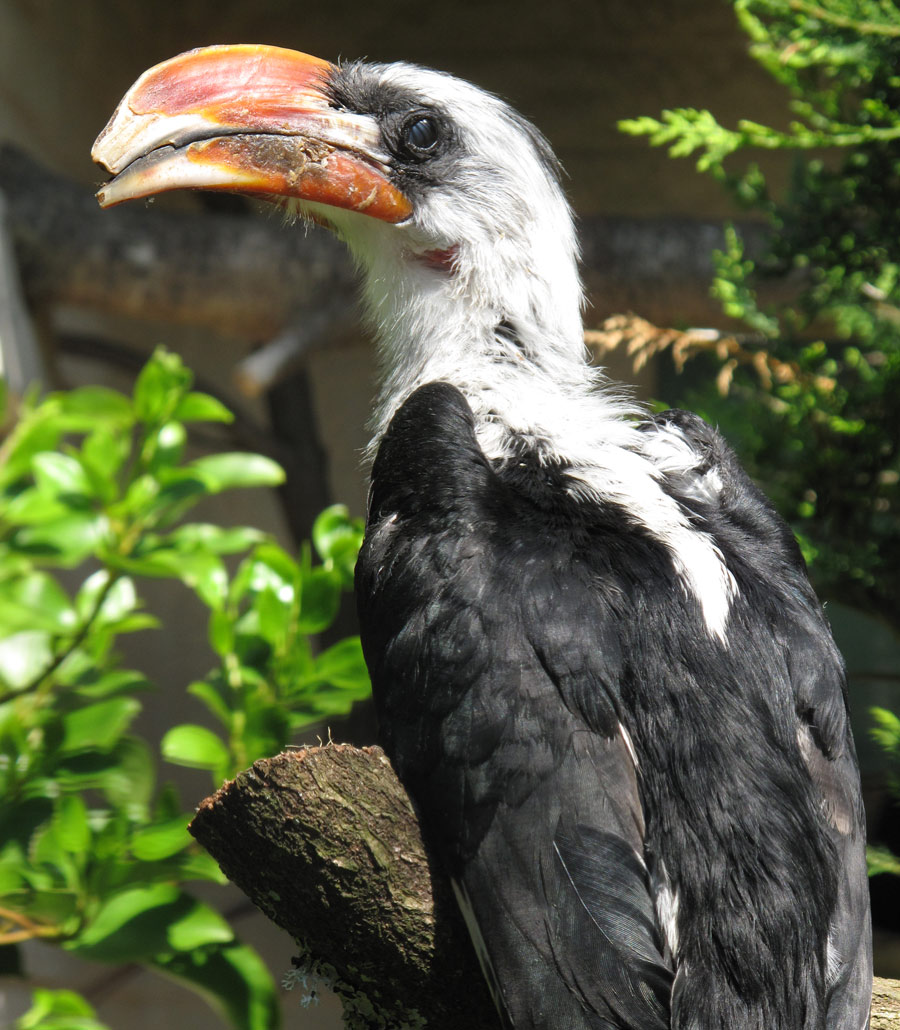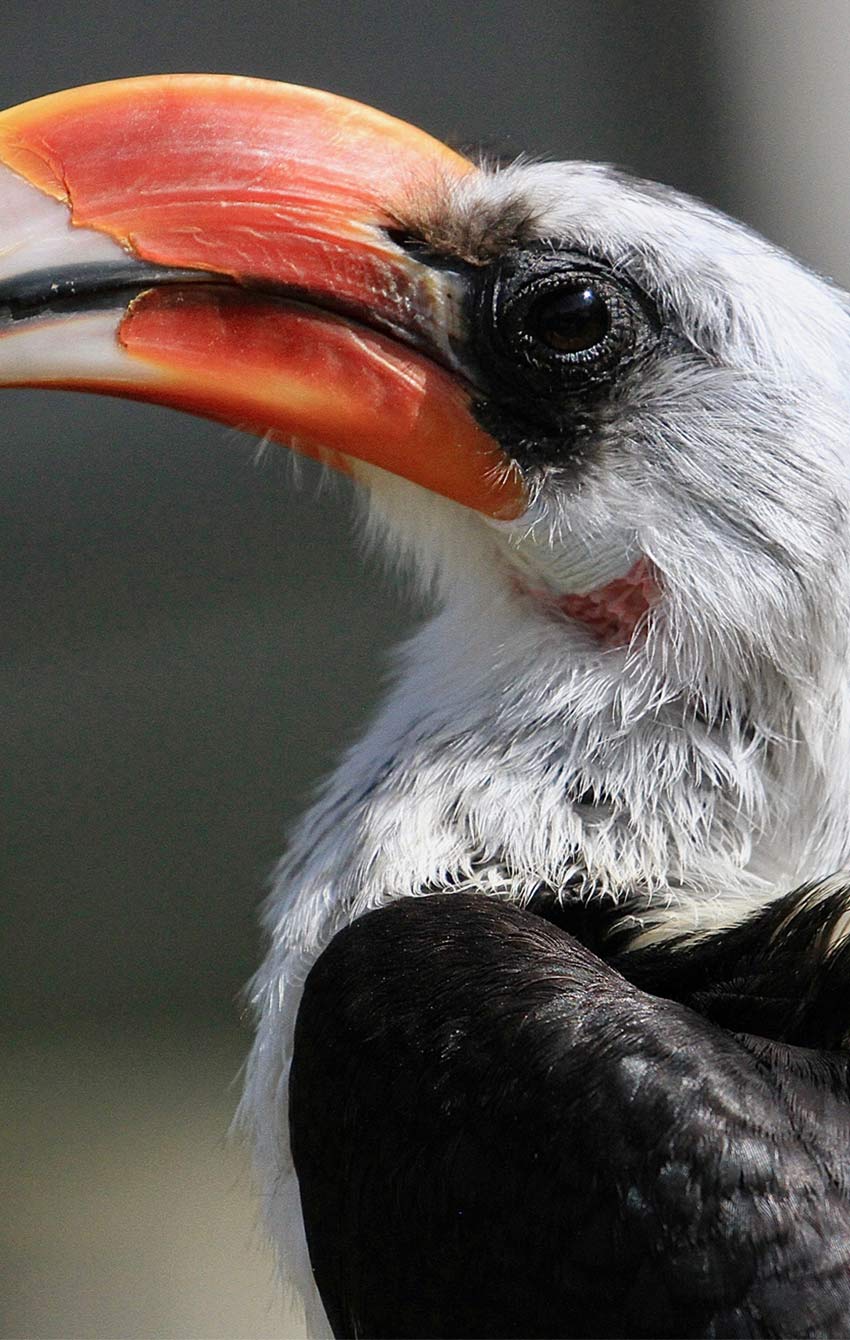
Von der Decken’s hornbill
Scientific Name: Tockus deckeni
Fast Facts
- Natural Habitat: Savannas, thorny scrub areas and open woodlands.
- Distribution: Ethiopia, Kenya, Somalia, Tanzania
- Lifespan: Approximately 10 years
- Diet: Insects such as grasshoppers, beetles and caterpillars, fruits, seeds, small reptiles and mammals
- Weight: 150–200 g
Behaviour
Von der Decken’s hornbills are very social, often seen in pairs or small family groups. Outside the breeding season they may form larger groups. They are territorial and pairs will defend their breeding and foraging areas.
Reproduction
Von der Decken’s hornbills form long-term monogamous pairs. The courtship has elaborate displays between the male and female including aerial chases and duets of calls. The male will perform feeding displays, offering food to the female to demonstrate his ability to provide and strengthening their bond. The female will seal herself inside a tree cavity leaving a small slit for the male to feed her through. The female will stay in the nest throughout incubation and chick rearing.
Conservation Status
Least Concern (LC)
Threats
The primary threats to Von der Decken’s hornbill are habitat loss and degradation due to deforestation and land conversion for agriculture. Climate change is also a concern as it alters food availability and the ecosystem in their habitats.
Conservation
The major conservation efforts for this species includes protecting and managing their natural habitats. There are also efforts to minimise habitat destruction in areas that are not protected. Community education is important as they help local communities to understand the importance of conserving hornbills and sustainable land use.
Did You Know?
- The distinct bill colouration is a key feature for distinguishing male and female Von der Decken’s Hornbills.