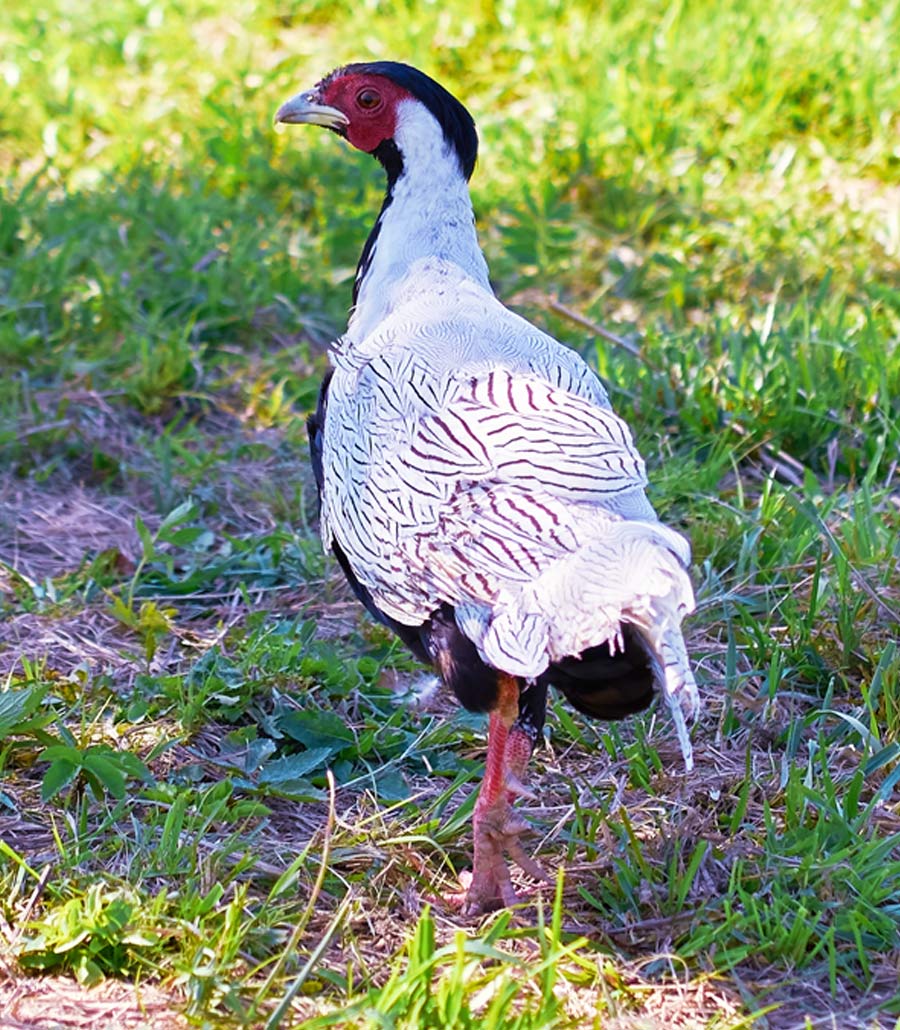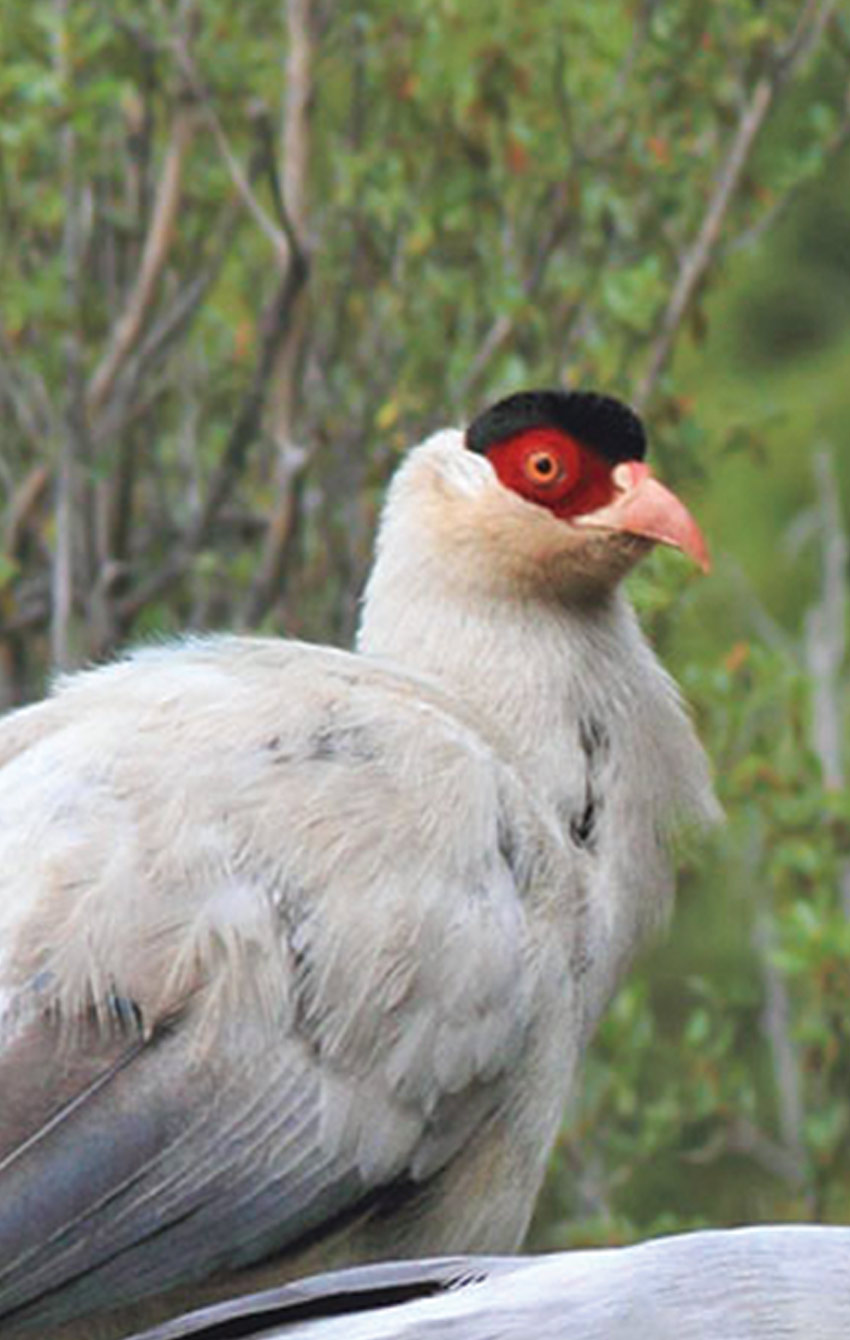
White Eared Pheasant
Scientific Name: Crossoptilon crossoptilon
Fast Facts
- Natural Habitat: High altitude coniferous and mixed forests
- Distribution: China – southeastern Tibetan Plateau, western Sichuan, southern Qinghai and northwestern Yunnan provinces
- Lifespan: 10–15 years
- Diet: Mainly roots, bulbs, seeds, leaves and shoots (bamboo). Insects, small invertebrates and small vertebrates.
- Weight: 2.5–3.5 kg
Behaviour
The white eared pheasant is a primarily ground dwelling species that forages on the forest floor. They are usually found in small groups or pairs and are particularly adept at navigating steep, rocky terrain. They use their strong legs to scratch through snow and leaf litter to find food.
Reproduction
Usually breeding season occurs in April-June which is the arrival of spring and better food availability. Males will establish territories and put on displays to attract females. The females will build a nest on the ground, hidden by dense vegetation or rocky crevices to protect the eggs against predators. The female will lay 4–7 eggs, that she will solely incubate for 24–25 days.
Conservation Status
Least Concern (LC)
Threats
Habitat loss and fragmentation due to the rugged terrain and human activities such as deforestation and land conversion for agriculture. Hunting and poaching pose threats in some areas where the White eared pheasants are targeted for their plumage and meat.
Conservation
The main conservation efforts focus on habitat preservation through the establishment of protected areas. There are also ongoing community education programmes that have the goal of reducing hunting pressures.
Did You Know?
- The White eared Pheasant has cultural significance in some Tibetan and Chinese communities, where it is sometimes depicted in art and folklore as a symbol of purity and endurance due to its striking white plumage and hardy nature.