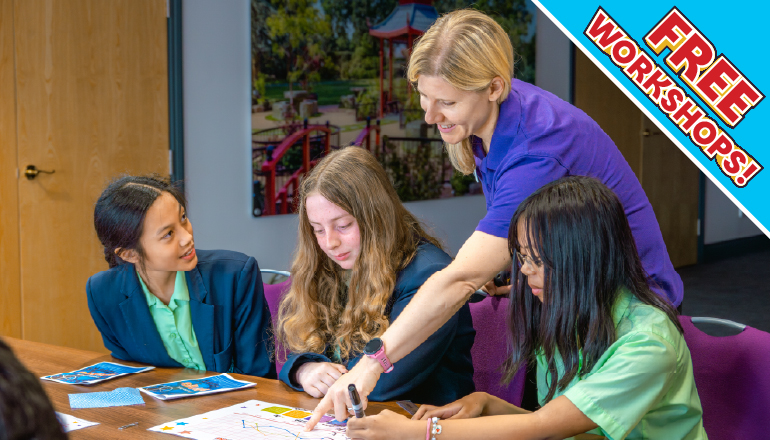
Paultons Park is proud to be a registered centre, offering AQA Unit Award Schemes to evidence learning. Learners who participate in the Unit Award Scheme (UAS) and meet pre-determined objectives receive certificates issued by AQA. Units are engaging and offer worthwhile educational experiences to boost learner confidence and self esteem.
All units are delivered at Paultons Park with learners visiting the site for 90 minute weekly sessions over a half term (9 hours learning total). Each weekly session is planned to meet key objectives which will count towards cowill leave with increased practical knowledge, improved transferableskills, evidence of achievement and an AQA Unit Award Scheme certificate listing their achievements.
See our current (and future) courses below. Feel free to book a no-obligation discovery call with our Education Team. Course rates include learner registration with AQA and certificate(s) upon completion.
Centre registration number: 85766
Zoology: Designing and delivering animal enrichment – Level One
What will learners be doing?
This hands-on course gives learners the opportunity to recognise the importance of animal enrichment within a modern zoo. Learners will design and make various types of enrichments for animals in the park and evaluate their effectiveness.
What are the course outcomes?
On successfully meeting the unit evidence requirements, learners will:
Demonstrate the ability to:
- Define what is meant by the term ‘enrichment’
- Identify at least two different types of enrichment
- Identify at least one natural behaviour of a chosen animal
- Select appropriate materials to provide enrichment for chosen animals
- Design and create appropriate enrichment for chosen animals
- Give the enrichment to the chosen animal with support
Show knowledge of:
- At least two reasons why it is important to provide animals with enrichment
- At least two different types of enrichment you can provide, e.g. food-based, sensory, cognitive
Experienced:
- Watching at least two animals using enrichment and evaluating how effective it is
Course details
Unit Code 118103
8 to 12 learners
Minimum age 12 years
£149 + VAT per learner (6 x 1.5-hour sessions at Paultons Park)
Enquire now!Zoology: Researching careers in zoology and conservation – Level One
What will the learners be doing?
Through discussions, research and hands-on experiences, learners will find out all about the different job roles and career paths for those wanting to work with animals.
What are the course outcomes?
On successfully meeting the unit evidence requirements, learners will:
Demonstrate the ability to:
- Name at least three different job roles that exist in zoological organisations
- Create a list of relevant questions to find out more about a specific job role of their choosing
Show knowledge of:
- What a standard day in the life entails for at least three people in different roles in a zoological organisation
- At least three skills that are useful when working in a zoological organisation or animal related job
- The variety of job roles that exist across a zoological organisation
- What the possible steps are to achieve a chosen job role
- What employers look for when reviewing applications for a role
Experienced:
- Taking part in question and answer session with at least one staff member from a zoological organisation.
Course Details
Unit Code 118110
8 to 12 learners
Minimum age 12 years
£149 + VAT per learner (6 x 1.5hour sessions at Paultons Park)
Enquire now!Zoology: The role of the modern zoo in wildlife conservation – Level Two
What will the learners be doing?
Working with experienced staff, learners will go behind the scenes of a modern zoo, looking at the importance of conservation and research in a modern zoo. There will be plenty of discussion, tasks and opportunities to experience research tasks with our animals.
What are the course outcomes?
On successfully meeting the unit evidence requirements, learners will:
Acquired an understanding of:
- How modern zoos play an important role in wildlife conservation, including the importance of breeding programmes and public engagement
- How the role of zoos has changed over the last 200 years
- Why research is a vital part of modern zoos, helping them to stay at the forefront of animal welfare and conservation science
Shown knowledge of:
- At least three threats currently facing wildlife
- What the IUCN red list is and the different groups it categorises wild animals into
- What ZSL stands for and what the purpose of the organisation is
- At least two examples of how conservation organisations like ZSL protect endangered species
- Why networks, such as BIAZA, are important in supporting the work of zoos
- At least two reasons why record keeping is important in zoological collection, eg the zoological information management system (ZIMS)
Experienced:
- Taking part in behind the scenes tours of a modern zoo, seeing how they care for their animals
- Working in a modern zoo by taking part in at least two hands-on animal husbandry tasks
Course Details
Unit Code 118097
8 to 12 learners
Minimum age 12 years
£149 + VAT per learner (6 x 1.5hour sessions at Paultons Park)
Enquire now!Hospitality: Introduction to the hospitality industry – Level One
What will the learners be doing?
Learners will be immersed in the hospitality industry and specifically roles within retail and catering. Through talks with staff, role play, tours of the park and other activities, learners will come away with an understanding of the hospitality industry and what it takes to work within a busy visitor attraction.
What are the course outcomes?
On successfully meeting the unit evidence requirements, learners will:
Demonstrate the ability to:
- Identify the main four outlets within the hospitality industry and the purpose of each
- give six examples of service providers in each group of the hospitality industry
- List the main different types of jobs in one area of the hospitality industry
- Outline at least two different working patterns within one area of the hospitality industry
- Give at least two examples of career promotion opportunities available in one area of the hospitality industry
- Research information on the training and career opportunities for a chosen job role
- Describe the requirements in relation to personal presentation, timekeeping, attendance and behaviour for a given workplace
- Identify the main duties for a chosen job role and the possible consequences if these are not adhered to
- Outline the fire, accident and health and safety procedures for a given workplace or role
- Identify at least two reasons for approaching supervisors and colleagues and how to do this
- Describe at least two ways of maintaining good working relationships with colleagues and managers
Course Details
Unit Code 116249
8 to 32 learners
Minimum age 12 years
£149 + VAT per learner (6 x 1.5hour sessions at Paultons Park)
Enquire now!Hospitality: Principles of Customer Service – Level One
What will learners be doing?
Through roleplay, practical activities, talks with staff and tours of the park, learners will get to grips with the principles of customer service and what it means to an attraction with over 1million guests. Learners will research different customer profiles, how to meet their needs and exceed their expectations. We’ll also look at the importance of communication and how to meet the needs of guests who might require additional support.
What are the course outcomes?
On successfully meeting the unit evidence requirements, learners will:
Demonstrate the ability to:
- Identify three different types of customers
- Identify two different needs of customers
- State what is meant by customer satisfaction
- State what is meant by customer expectations
- State two effective methods of communication to use when dealing with different customers
- Outline the main ways of using questions to deal with different customers effectively
- Identify two examples of positive body language, two examples of negative body language and two examples of facial expression
- State how customers’ body language can impact on customer service
- State how their own body language can impact on customer service
- State the importance of customer and organisation confidentiality
- State the limits of their own authority when dealing with customers
- State how to deal with customer queries effectively
- Identify three common customer problems and complaints
- State how they would deal with each of those three problems and complaints
- Outline how they would deal with at least two given difficult situations
Course details
Unit Code 113419
8 to 32 learners
Minimum age 12 years
£149 + VAT per learner (6 x 1.5-hour sessions at Paultons Park)
Enquire now!Education at Paultons