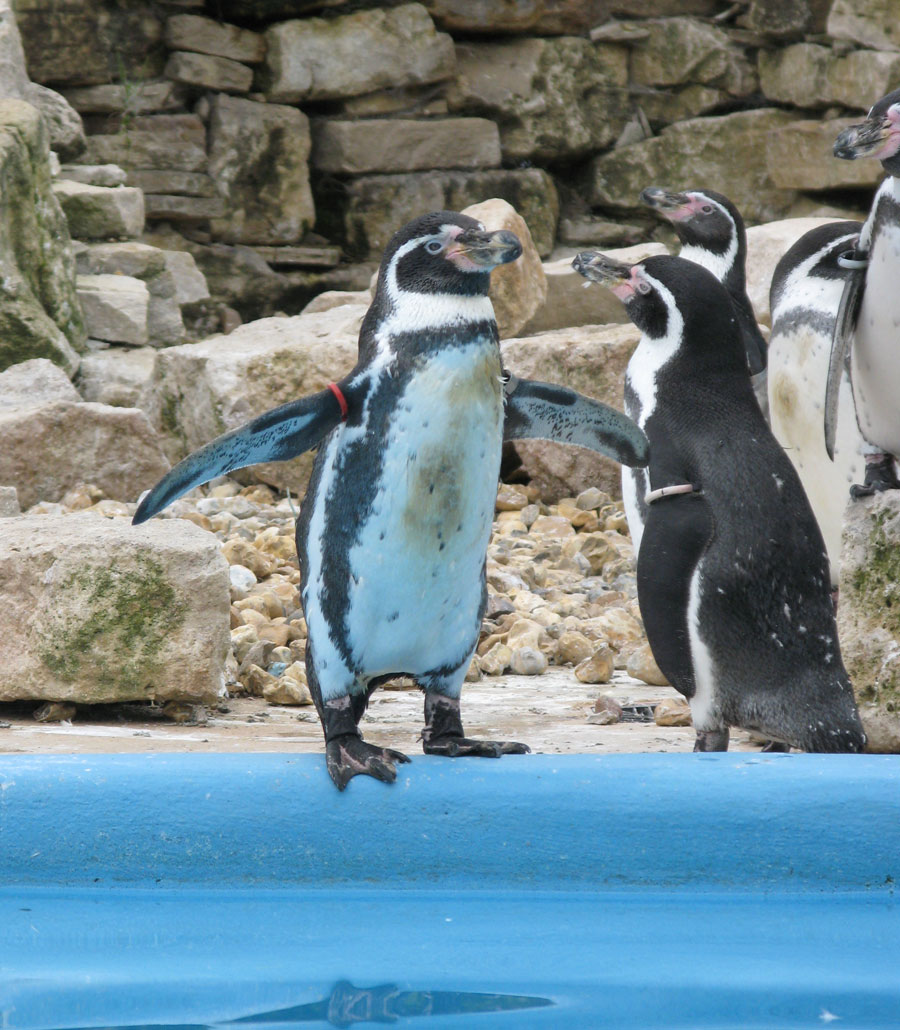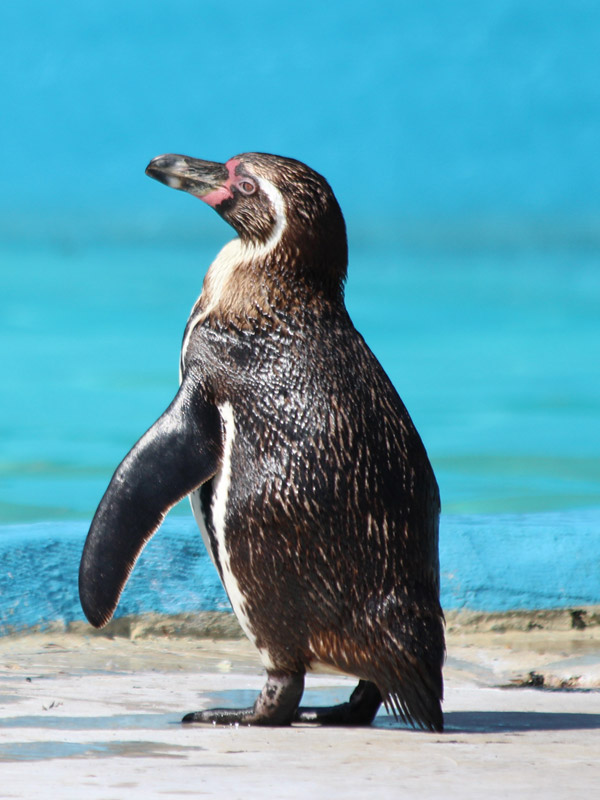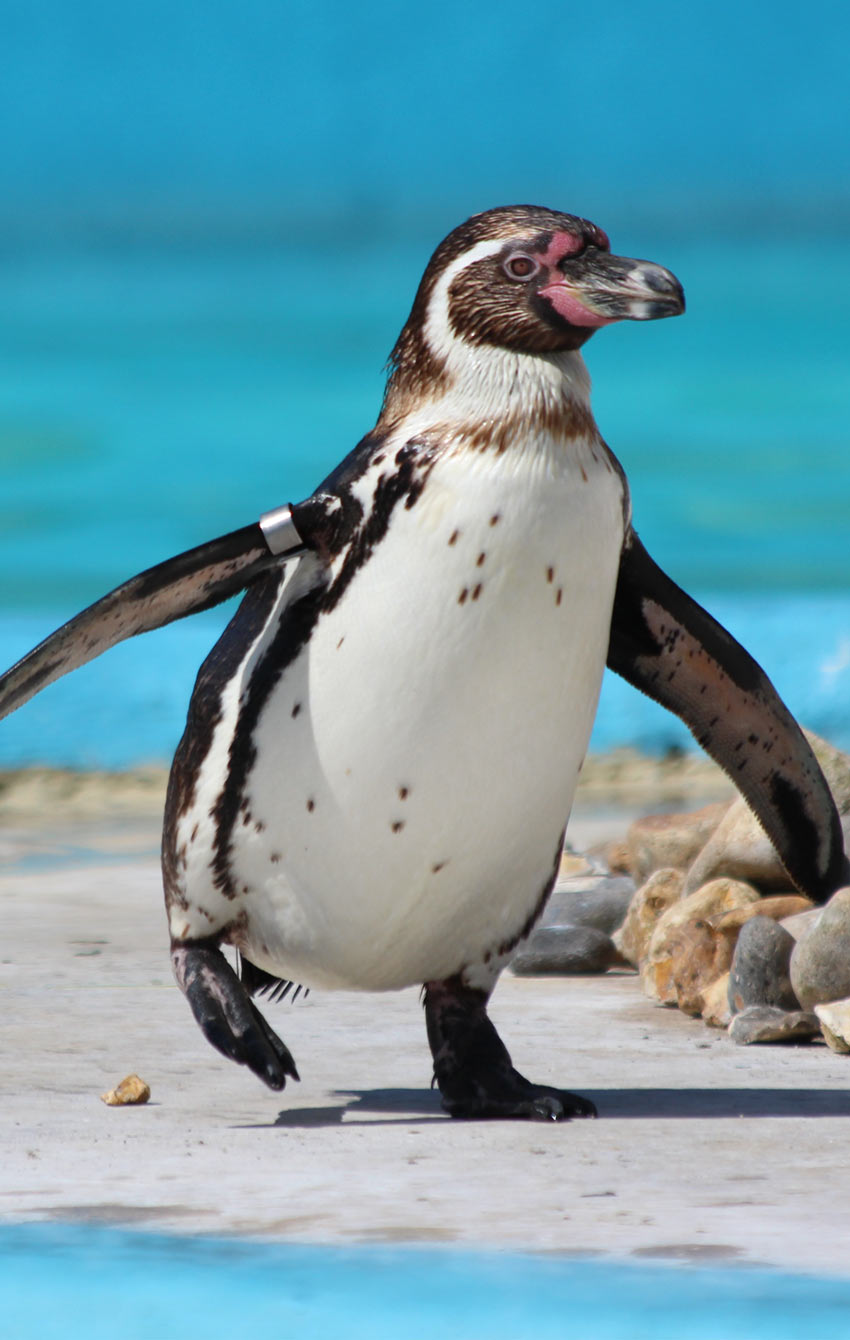
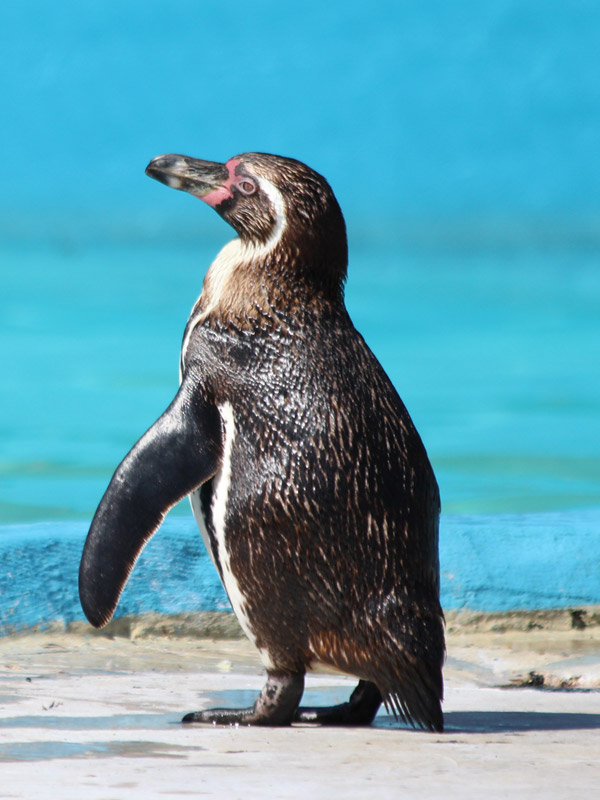
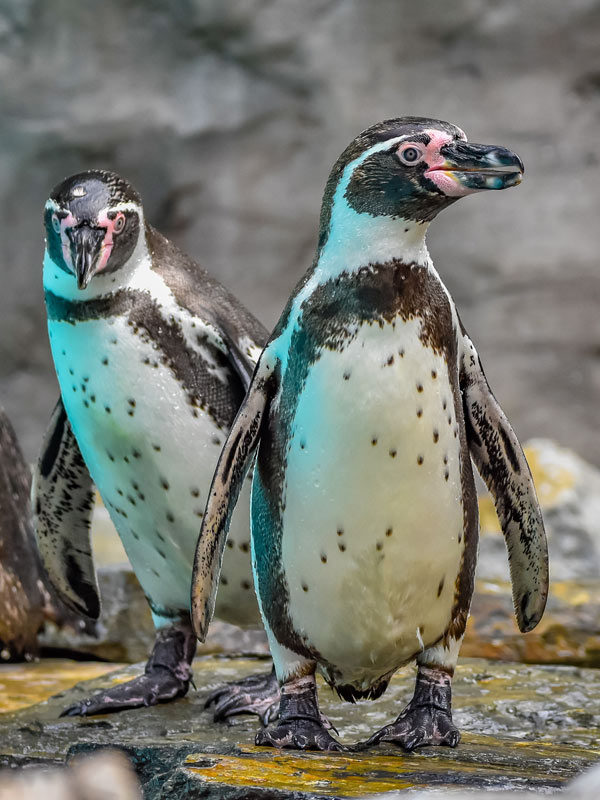
Humboldt Penguin
Scientific Name: Spheniscus humboldti
Fast Facts
- Natural Habitat: Rocky coastlines
- Distribution: Chile and Peru
- Lifespan: 12–15 years
- Diet: Anchovies, Sardines, herring, crustaceans and cephalopods
- Weight: 4–5 kg
Behaviour
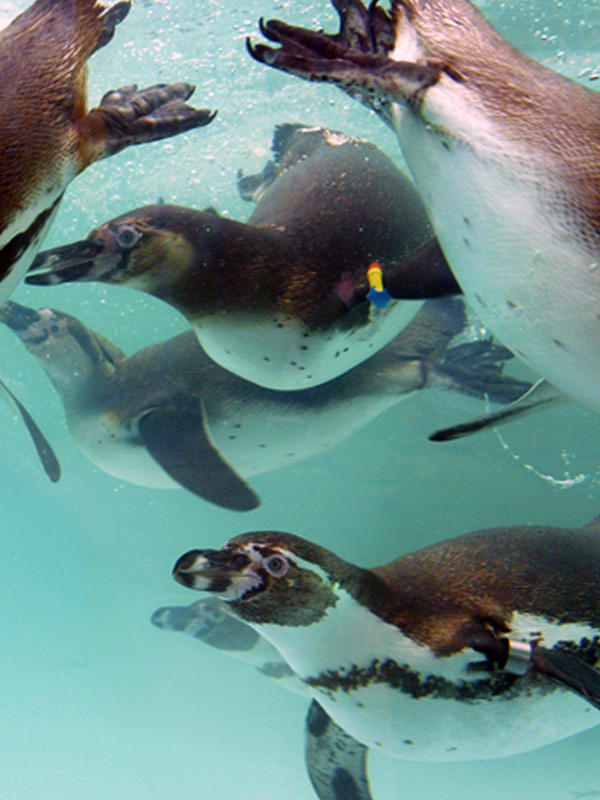
Humboldt penguins forage for prey at depths of 60m but most dives are to around 30m. Penguins don't have teeth but instead have spines facing backwards on the inside of their mouth and tongue. This allows them to grip fish as they are swimming and swallow them whole. When in the ocean, the Humboldt penguin may become prey for sharks, fur seals, orcas and sea lions. Eggs and chicks are often preyed upon by snakes, foxes, cats and dogs. They are highly social and communicative species. They gather in large colonies to give then protection from predators.
The Humboldt penguin goes through their annual moult between July and September. This takes approximately 10 days, during which they lose all of their feathers and regrow new ones. This is essential for insulation and the waterproofing of their feathers. During this period the penguins will fast and have to build enough fat reserves to sustain themselves while moulting.
Reproduction
Humboldt penguins are monogamous and can produce young throughout the year, but timing depends on availability of resources, geography and the phase of El Niño. It normally peaks in April-July and August-December. Usually, nests are made in burrows in the ground or guano deposits (seabird droppings), but occasionally they will lay their eggs in caves or rocky areas scraped clean of vegetation that they line with pebbles, feathers, plants and driftwood. They will lay up to 2 eggs in each clutch. Both parents will incubate the eggs over 40–42 days. Both parents help to feed the young chicks until they fledge at 10–12 weeks
Conservation Status
Vulnerable (VU)
Threats
Overfishing of Peruvian anchovies, an important food source for the Humboldt penguin. They also face threats from entanglement in pollution, fishing nets, hunting by humans for food or the pet trade and nesting site loss. Guano harvesting for fertiliser disturbs the nesting habitats of this species as well.
Conservation
For this species, regular monitoring of colony size in Peru and Chile is important as well as the creation of protected nesting and foraging areas. They are protected under CITES appendix I so they cannot be traded between countries. There are various community engagement and research projects ongoing to help better understand this species and protect them.
Did You Know?
- They can reach up to 30 miles per hour in the water!
- They have a third eyelid called a nictating membrane enabling them to see better in the water and catch their food.
- They cannot fly, so their wings act as flippers to propel them through the water at high speeds.
- They have a preen gland at the base of their tail where they gather oil to keep their feathers waterproof and well insulated.