Chilean Flamingo
Scientific Name: Phoenicopterus chilensis
Fast Facts
- Natural Habitat: Freshwater and saltwater shallow lakes, lagoons, marshes and coastal mudflats.
- Distribution: Argentina, Bolivia, Brazil, Chile, Ecuador, Paraguay, Peru and Uruguay
- Lifespan: Approximately 40–60 years
- Diet: Algae and invertebrates such as brine shrimp and molluscs.
- Weight: 2–4 kg
Behaviour
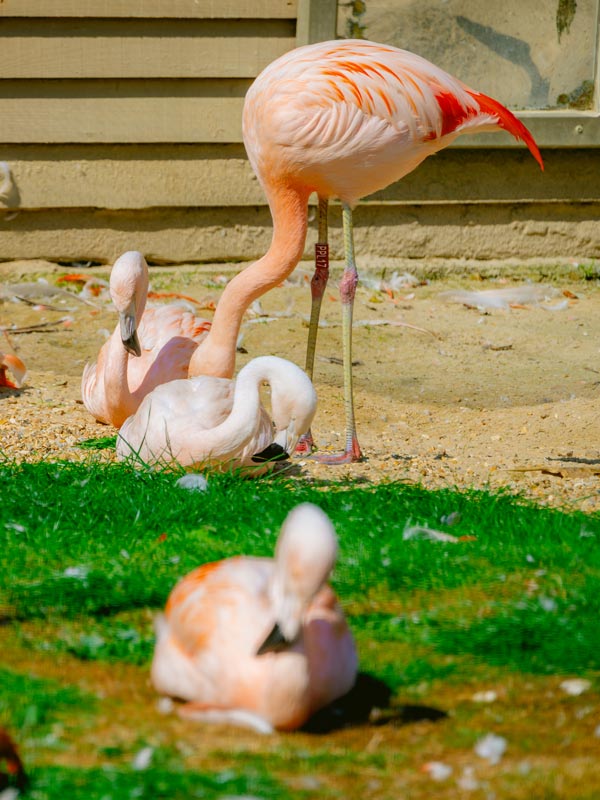
Chilean flamingos are highly social birds living in large colonies of thousands of individuals. This provides safety in numbers and lowers the risk of predation. Flamingos feed during both day and night.
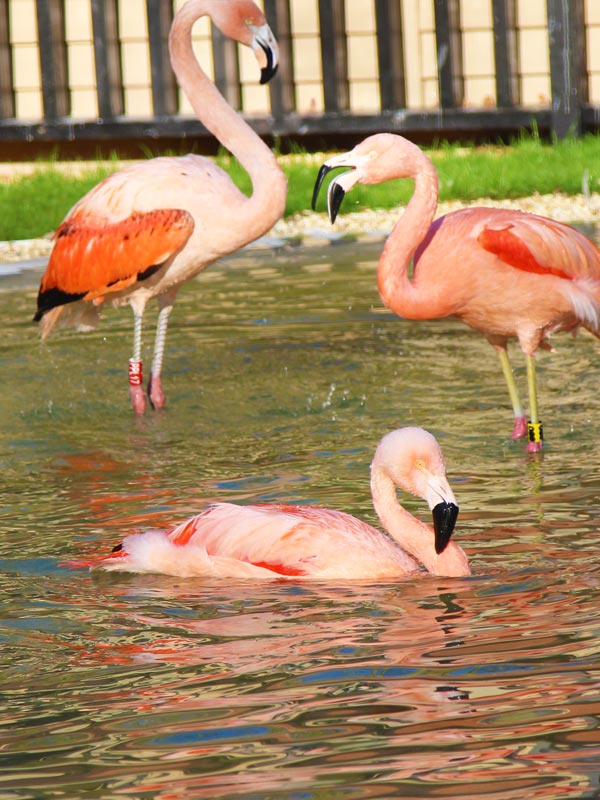
They have a specialised mechanism in their beak and tongue. When feeding they put their head upside down in the water and sweep them side to side, their tongue acts as a pump pushing water through comb-like structures in their beak, filtering out food items.
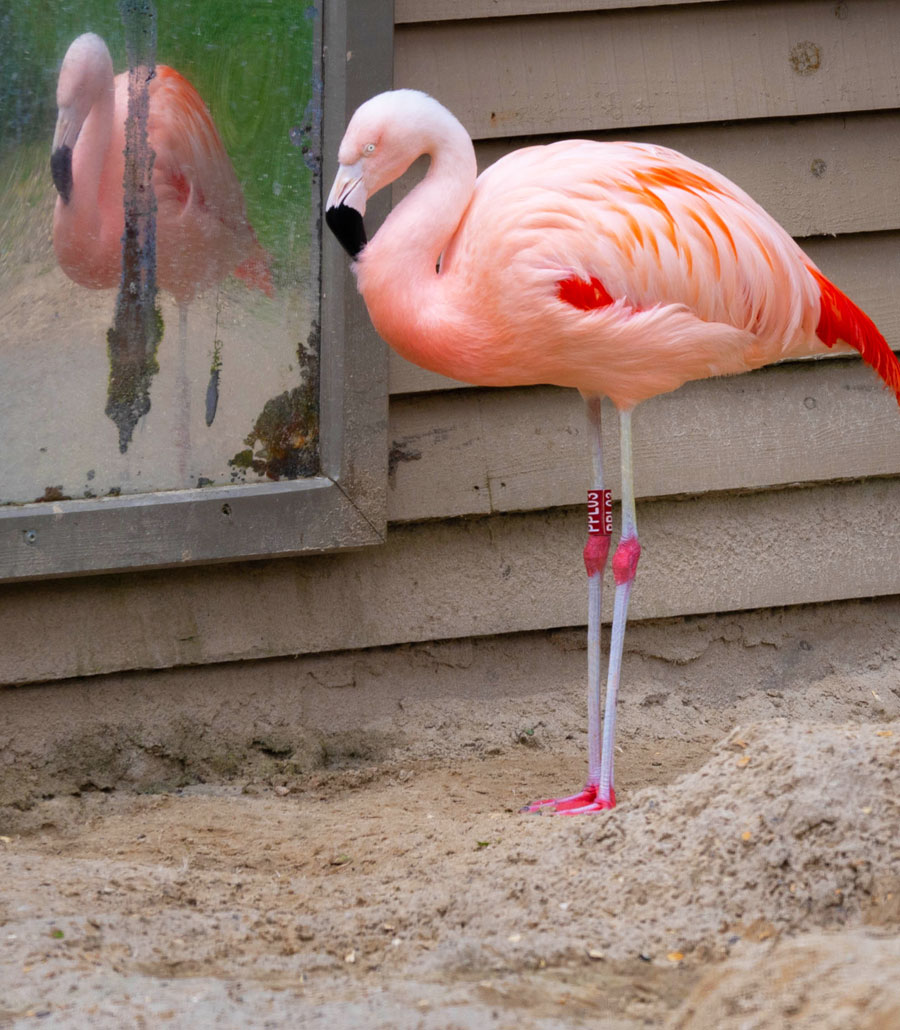
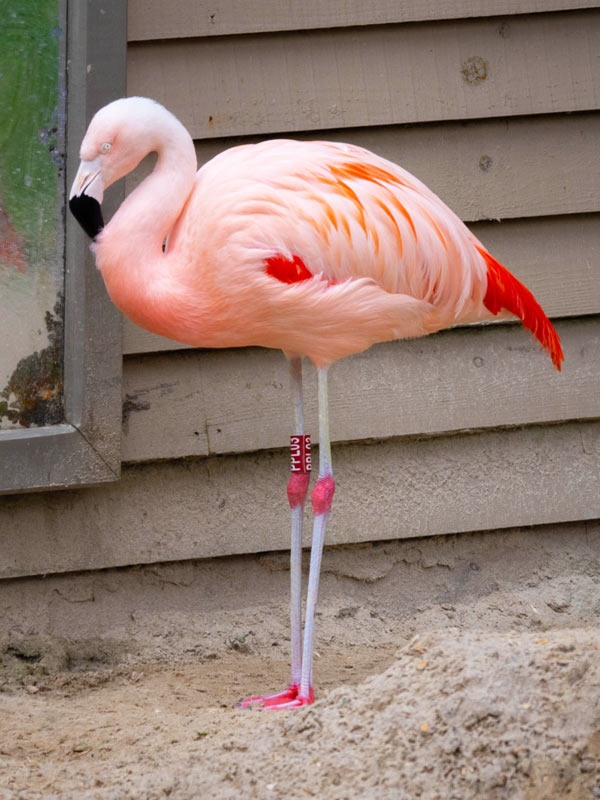
Flamingos stand on one leg as a way of conserving body heat. This is because their legs are exposed and lack feathers for warmth.
Reproduction
Chilean flamingos breed in large colonies. The flamingos build mounds of mud which the female will lay a single egg on. Both males and females are responsible for incubating the egg which hatches after approximately 27–31 days. Once the chick is hatched, both parents feed it ‘crop milk’, a nutrient rich secretion produced in their digestive tract.
Conservation Status
Near Threatened (NT)
Threats
Habitat loss and degradation due to human activities such as mining, agriculture or urban development. Other major threat include egg collection, being hunted for food and the pet trade. Climate change is also causing changes in the water levels of wetlands which is affecting the availability of both food and nesting sites.
Conservation
Protected areas have been established to provide safe nesting and feeding grounds for the flamingos. There are now environmental education programmes in place to help reduce threats from humans such as hunting and egg collection.
In addition to this, various zoos participate in captive breeding programmes with the aim of maintaining a healthy population in captivity so that one day they may be reintroduced.
Did You Know?
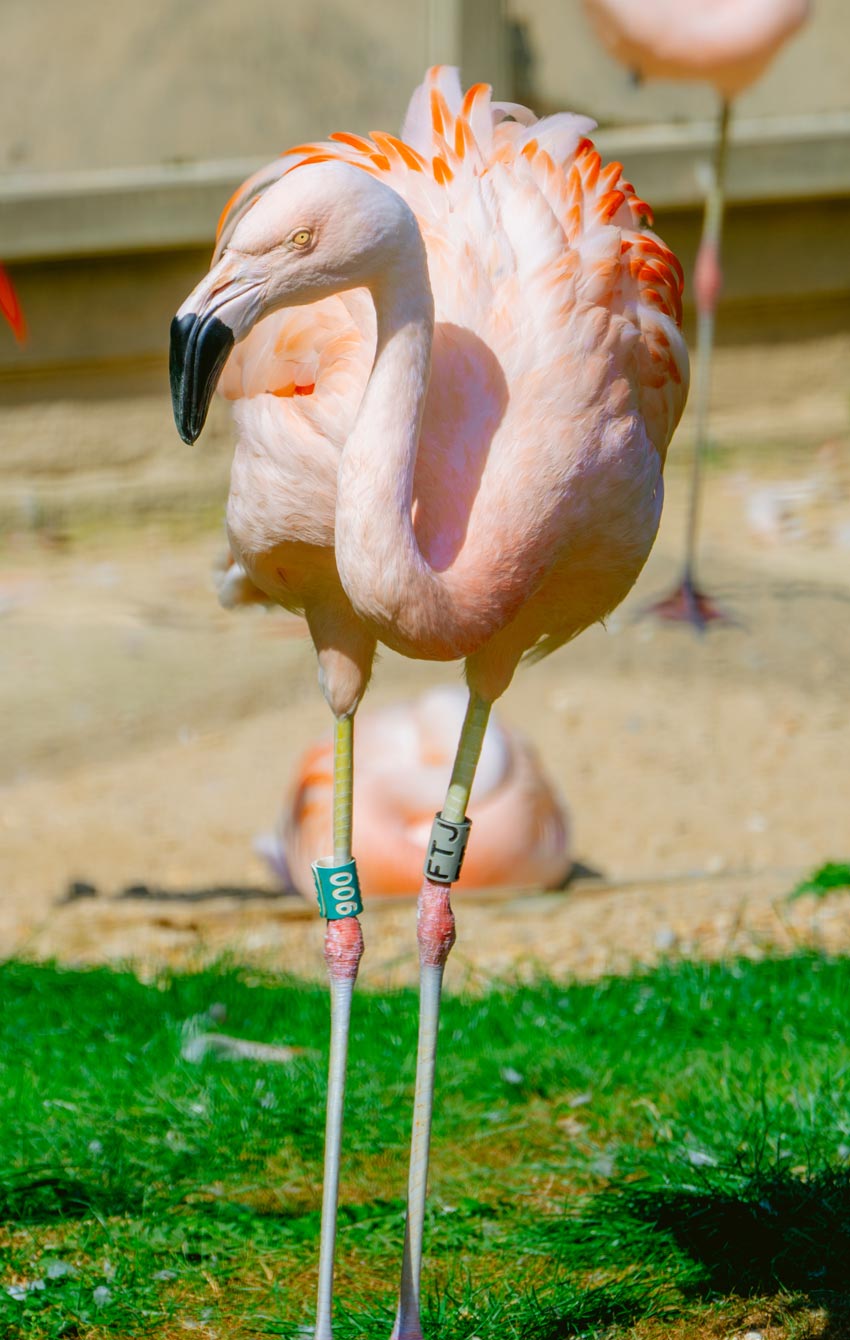
- The pink colouration of their feathers is due to the presence of carotenoid pigments in the algae and invertebrates they eat. Baby flamingos are grey.